

In the current digital landscape, simply ranking for a search term is no longer an option. You must also meet the content requirements of search engines and AI-driven platforms, including topical depth, semantic relevance, and structured content. This is the case with SEO topic clusters and topic clusters for AI.
In the current digital landscape, simply ranking for a search term is no longer an option. You must also meet the content requirements of search engines and AI-driven platforms, including topical depth, semantic relevance, and structured content. This is the case with SEO topic clusters and topic clusters for AI.
Organising content clusters around a core theme (rather than with random, dispersed keywords) allows a brand to build authority. By learning what topic clusters are and how to create them, businesses can improve their visibility on Google Search, AI answer engines, and voice platforms.
Table of Content
- Topic Clusters: The Core Understanding
- Topic Components of Topic Clusters
- Why do Topic Clusters Stand Out in Modern-Day Marketing?
- Other Major Success Factors of Topic Clusters
- Topic Clusters vs Traditional Keyword-Based SEO
- How Topic Clusters Support AI Search and Authority
- How to Create Topic Clusters (Step-by-Step Framework)
- Example of a Topic Cluster Model
- How Topic Clusters Influence Key Areas
- Advanced Strategies for Topic Clusters in the AI Era
- Why Topic Clusters Are the Future of SEO
- Conclusion
- FAQs About Content Clusters
Topic clusters will help you build digital authority in an AI-enhanced world, where search engines read the content that they index on the web. For this reason, structured topic clusters are important. This guide will provide the concept, framework, and benefits of topic clusters, along with a building process optimised for SEO and AI sustainability.
Topic Clusters: The Core Understanding
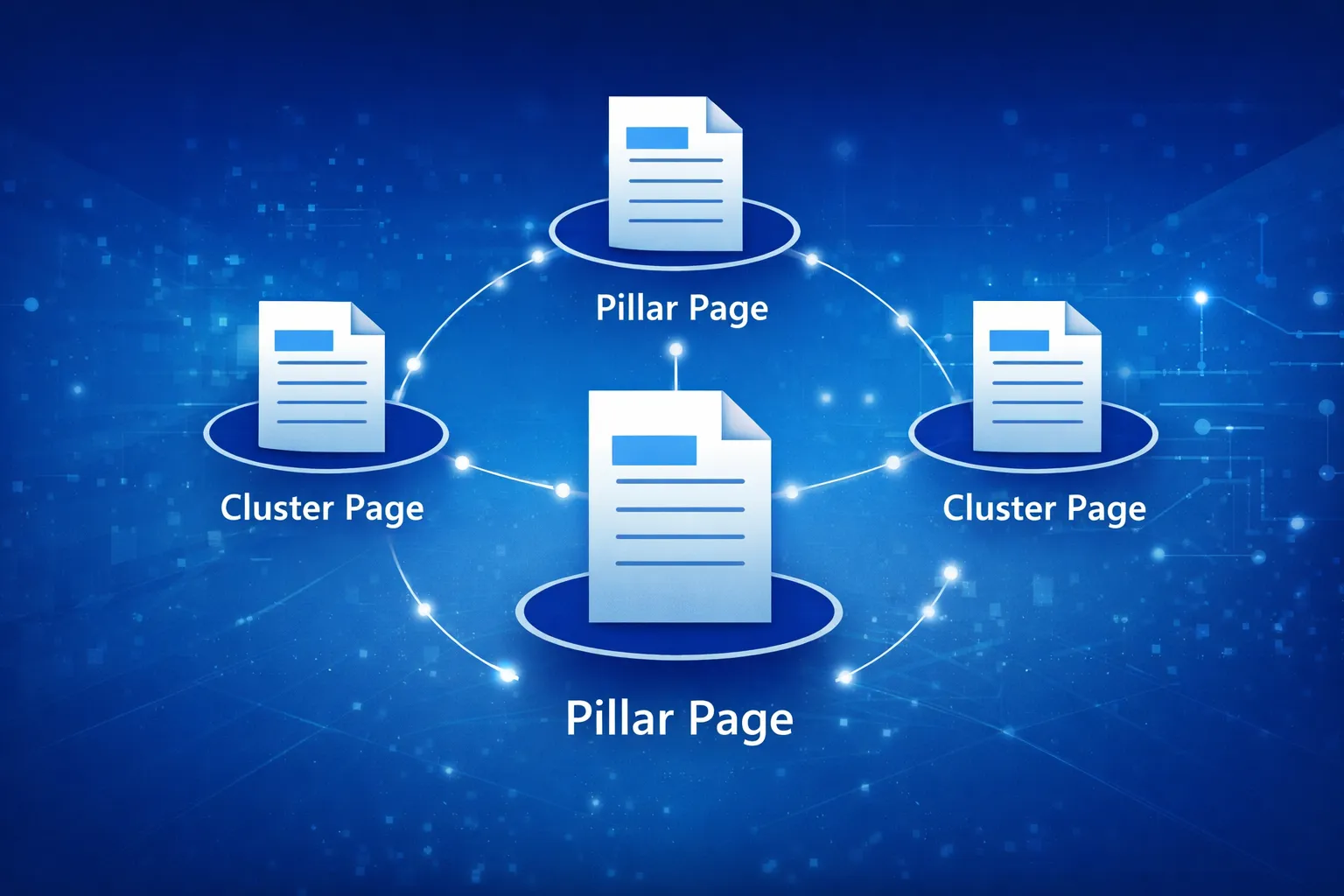
Topic Clusters represent the specific structure/content model in the digital sector. It is when web pages are linked together based on a primary subject of interest. It also needs a dedicated pillar page that covers the main subject. The topic clusters model also employs other pages that can be linked together under clusters with common subject subheadings.
The described pioneering model is meant to develop a strong understanding of the search engines on the relationships between the individual pages (hub pages) with respect to the revolving authority of the domain (topical authority).
Topic Components of Topic Clusters
In contrast to SEO that revolves around presuming a rank for standalone pages for a set of keywords, topic cluster content revolves around establishing authority for a topic.
| Component | Description |
|---|---|
| Pillar Page | Comprehensive guide covering a broad topic |
| Cluster Pages | Detailed content on related subtopics |
| Internal Links | Links connecting pillar and cluster pages |
| Keywords | Primary and secondary keywords mapped to topics |
Topic clusters are vital to modern digital marketing because of the underlying principles that govern search engines.
Why do Topic Clusters Stand Out in Modern-Day Marketing?
Search engines increasingly focus on semantic understanding rather than keyword matching. Content clusters help websites demonstrate expertise, relevance, and authority, key ranking factors in modern algorithms.
Other Major Success Factors of Topic Clusters
| Benefit | Impact on SEO |
|---|---|
| Improved site structure | Better crawlability and indexing |
| Strong internal linking | Efficient distribution of link equity |
| Topical authority | Higher rankings across multiple keywords |
| User experience | Better navigation and engagement |
| Keyword coverage | Ranking for long-tail and semantic queries |
Search engines can better understand content relationships and rank pages higher due to the internal linking and site architecture enhancements provided by topic clusters.
Furthermore, internal linking increases a page’s authority and improves its ranking and visibility potential.
Topic Clusters vs Traditional Keyword-Based SEO
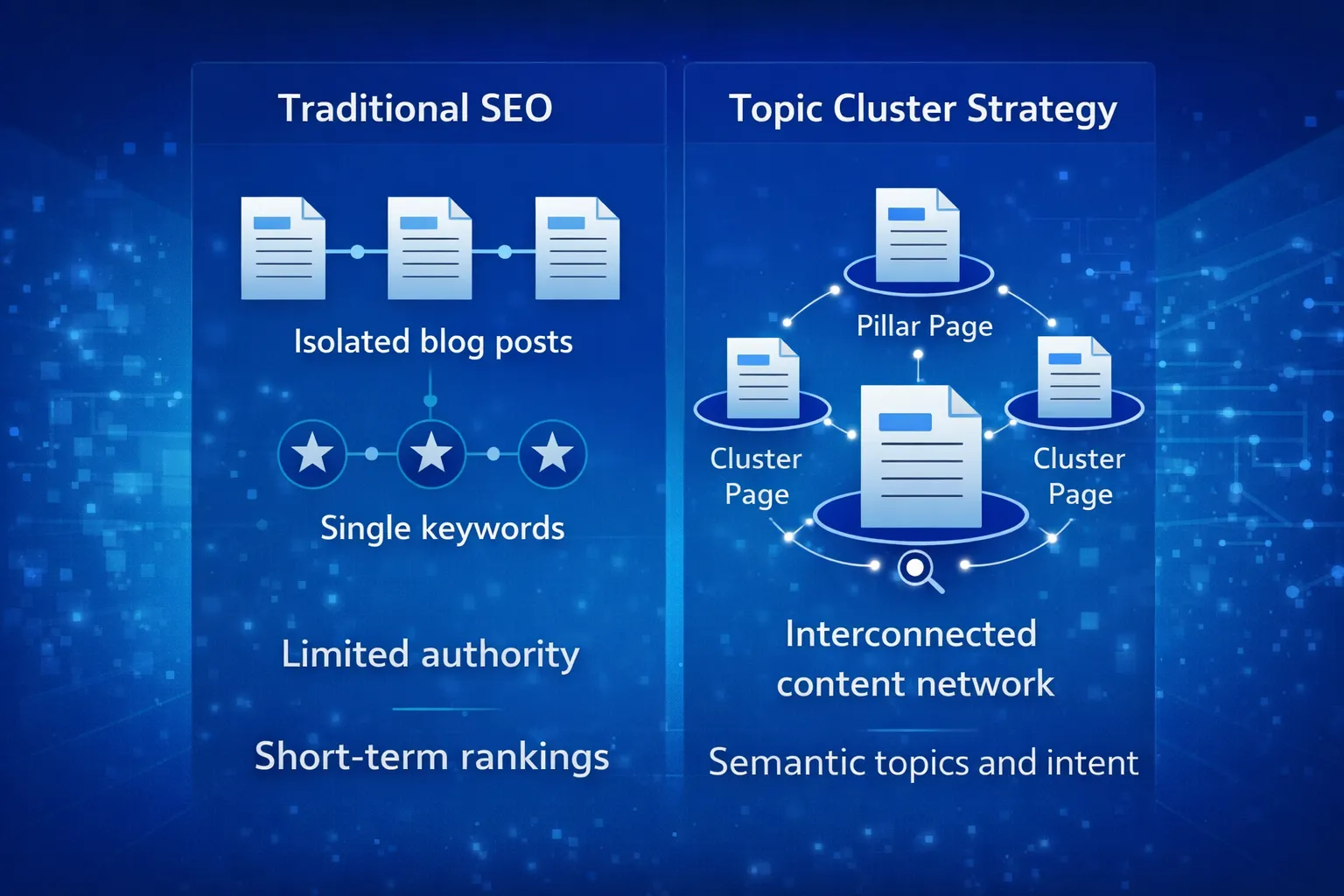
In contrast to SEO that revolves around presuming a rank for standalone pages for a set of keywords, topic cluster content revolves around establishing authority for a topic.
| Traditional SEO | Topic Cluster Strategy |
|---|---|
| Isolated blog posts | Interconnected content network |
| Single keywords | Semantic topics and intent |
| Limited authority | Strong topical authority |
| Short-term rankings | Long-term organic growth |
Topic clusters help marketers prove topical relevance and expertise, which is aligned with search engine prioritisation of authoritative content.
How Topic Clusters Support AI Search and Authority
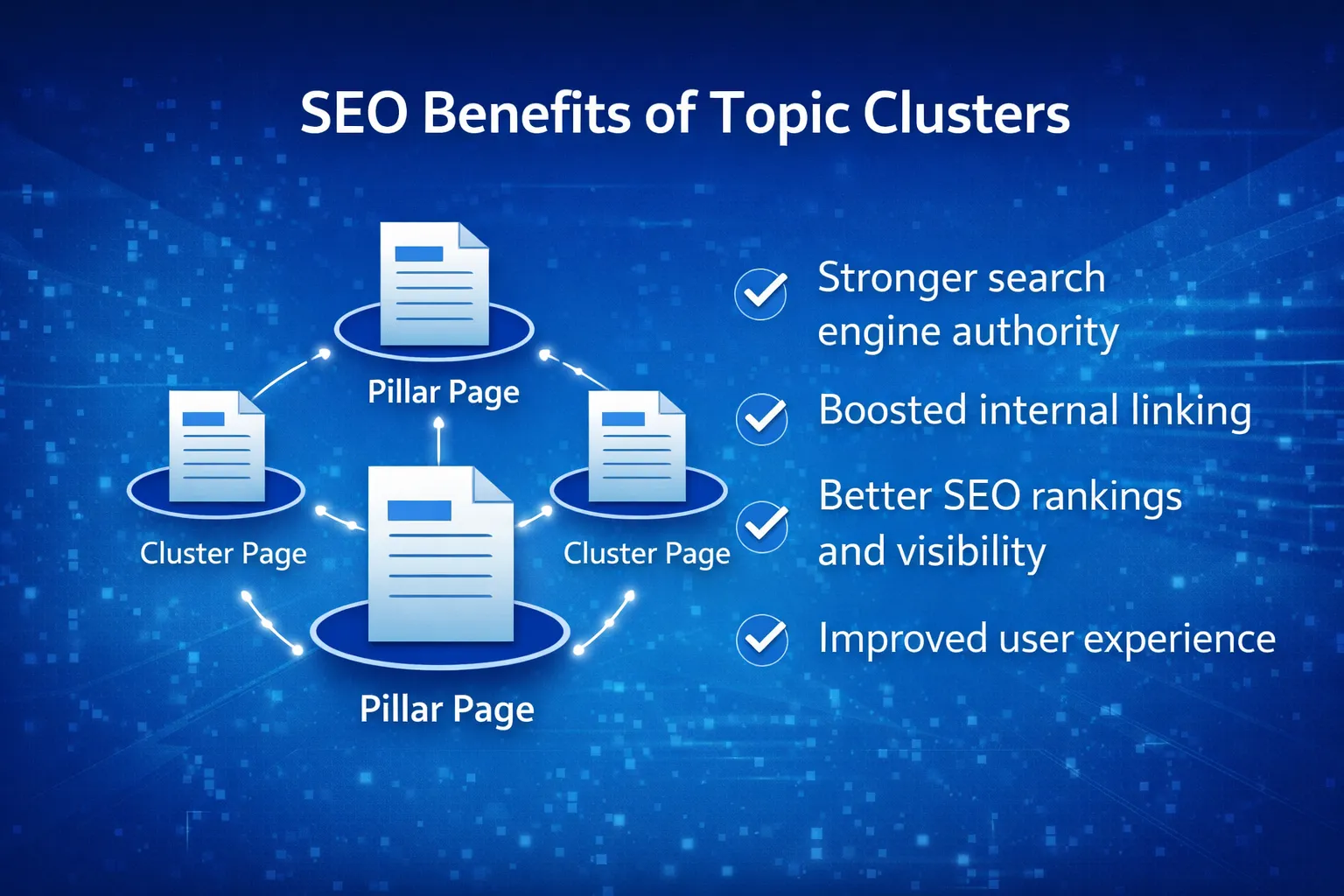
Search engine AI primarily focuses on the relationships between topics, entities, and the overall depth of content. While the structure of topic clusters aids AI systems in interpreting and citing content, in fact, most topic clusters promote and support the depth of content. AI searches prioritise relations that prove semantic understanding and contextual knowledge.
Criticality Of Topic Clusters for AI
- AI surveys the depth of content and substance, not keywords.
- Clear, logical, and structured internal linking makes it easier for AI systems to understand materials.
- Containing all topics related to a specific area builds authority on that area.
- AI looks for relations of content that prove a real understanding of the concepts.
Dynamic advances in search engines call for topic clusters to be foundational for search engines to provide a marked difference in a brand’s digital authority.
How to Create Topic Clusters (Step-by-Step Framework)
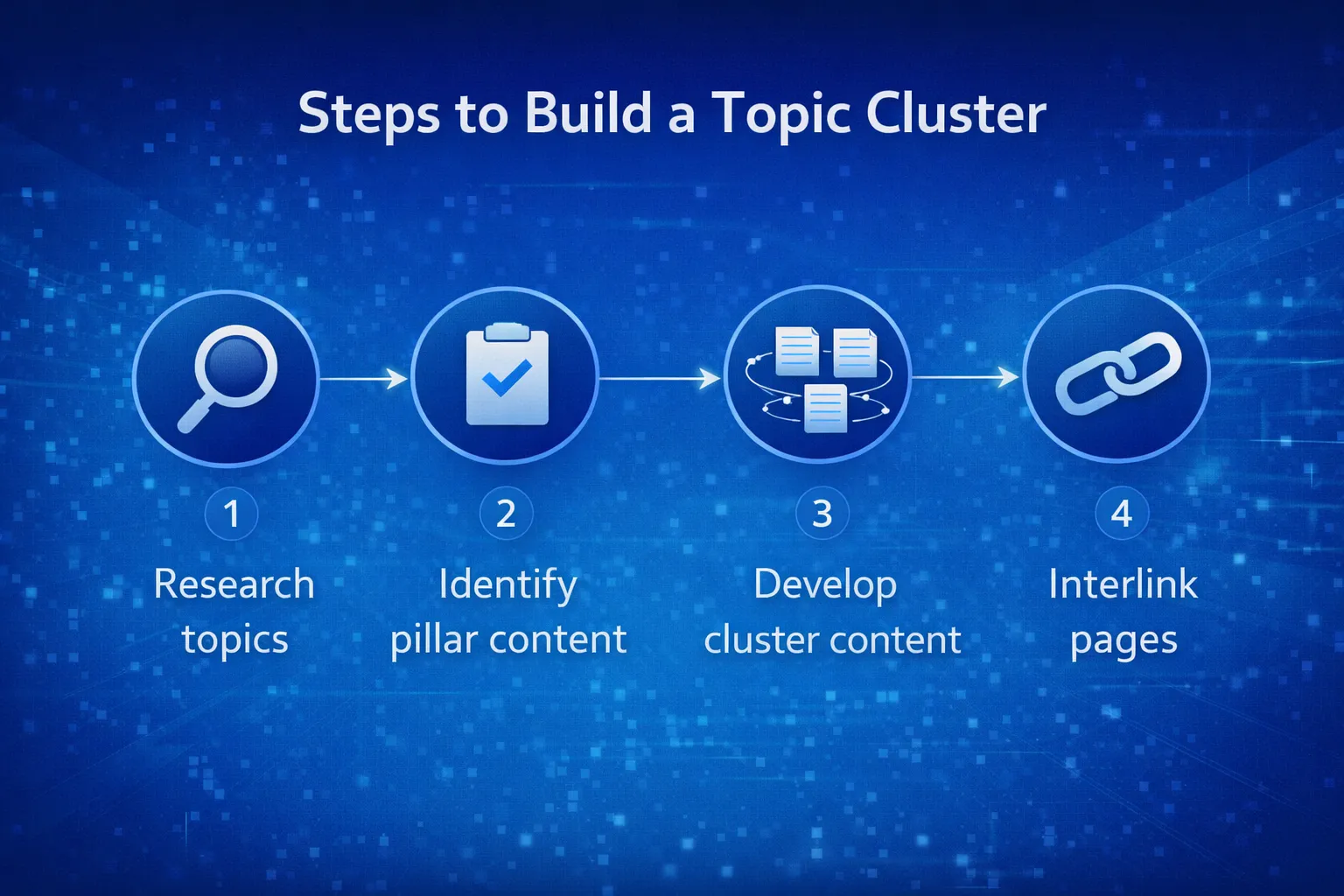
1. Identify a Core Topic
Select a broad topic that is pertinent to your business and audience. Example: digital marketing, SEO.
2. Keyword and Intent Research
Identify primary and secondary keywords based on search intent and provide examples
| Keyword Type | Example |
|---|---|
| Primary Keyword | SEO topic clusters |
| Secondary Keywords | topic clusters in SEO: How to create topic clusters |
| Long-tail Keywords | Topic clusters for AI: What are topic clusters |
3. Pillar Page Creation
Build a comprehensive resource that deeply explores an SEO topic. A pillar page serves as the main hub for all related content.
4. Cluster Content Construction
Create comprehensive resources for each sub-content cluster and address all related subtopics, FAQs, and use cases.
5. Execute Internal Linking
Link all cluster pages to the pillar page and to one another.
Link all cluster pages to the pillar page and to one another. Strategic internal linking enables search engines to better understand the content hierarchy and how the pages are related.
6. AI and SEO Optimisation
- Use Semantic Keywords
- Structured Headings
- FAQs and Schema
- Regularly Update Content
7 Monitoring and Performance Improvement.
Track Rankings and analyse traffic and engagement metrics.
Example of a Topic Cluster Model
Pillar Topic: SEO
| Cluster Content | Purpose |
|---|---|
| On-page SEO guide | Informational intent |
| Technical SEO checklist | Practical guidance |
| Link-building strategies | Authority building |
| SEO tools comparison | Commercial intent |
| SEO for AI search | Emerging trend |
This structure provides good coverage on the topic and improves the overall site ranking.
How Topic Clusters Influence Key Areas
Research and industry insights show that topic clusters significantly improve SEO performance:
- Enhanced internal linking improves rankings and site visibility.
- Structured content improves indexing and discoverability.
- Comprehensive topic coverage strengthens topical authority. (EOS Healthcare Marketing)
SEO Metrics Improved by Topic Clusters
| Metric | Impact |
|---|---|
| Organic traffic | Increased |
| Keyword rankings | Expanded |
| Bounce rate | Reduced |
| Time on site | Increased |
| SERP visibility | Improved |
Common Mistakes in Building Topic Clusters
| Mistake | Impact |
|---|---|
| Poor internal linking | Weak authority signals |
| Overlapping content | Keyword cannibalization |
| Shallow cluster pages | Low topical depth |
| Ignoring search intent | Poor rankings |
| Outdated content | Declining visibility |
Avoiding these mistakes will help ensure long-term success.
Advanced Strategies for Topic Clusters in the AI Era
Semantic Clustering
Go beyond keywords and focus on entities, attributes, and relationships.
Intent-Based Clusters
You can organise the content based on user intent.
- Informational
- Navigational
- Transactional
AI-Optimized Content Structure
- Use a conversational tone
- Include structured data
- Optimise for featured snippet
Content Gap Analysis
Identify what subtopics are missing with AI tools and expand the gaps in clusters.
Topic Clusters vs Content Hubs
| Topic Clusters | Content Hubs |
|---|---|
| SEO-focused | UX-focused |
| Pillar + cluster pages | Centralized resource |
| Internal linking-driven | Navigation-driven |
These strategies complement one another, with topic clusters providing the clearer SEO upside.
Why Topic Clusters Are the Future of SEO
Search engines are evolving toward semantic understanding and AI-driven ranking systems. Topic clusters align perfectly with this shift because they demonstrate expertise, relevance, and authority.
By implementing topic clusters, businesses can future-proof their SEO strategy and improve visibility across traditional search engines and AI platforms.
Also Read - Human-First Content vs AI SERPs: What Google Isn’t Addressing Yet
Conclusion
In the era of AI-driven search, building authority is no longer about publishing random blog posts. It’s about creating interconnected knowledge ecosystems. By mastering SEO topic clusters and learning how to create topic clusters, brands can achieve sustainable rankings and AI visibility.
Topic clusters help websites demonstrate topical depth, improve internal linking, and align content with search intent. As AI systems increasingly prioritise structured, contextual content, topic clusters will remain a cornerstone of digital strategy.
Whether you’re a marketer, blogger, or business owner, investing in topic clusters for AI is one of the most powerful ways to build long-term authority, visibility, and trust in the evolving search landscape.
FAQs About Content Clusters
Q1. How do content clusters help build AI authority in SEO?
Ans. Content clusters help AI systems and search engines understand topical depth and expertise. By organizing related content around a central pillar topic, you signal authority, relevance, and semantic relationships. This improves visibility in AI-driven search results and strengthens your brand’s credibility within a specific subject area.
Q2. What is the difference between topic clusters and traditional keyword-based SEO?
Ans. Traditional SEO focuses on individual keywords, while topic clusters emphasize interconnected content around a broader theme. Topic clusters improve contextual understanding, user experience, and AI search relevance. This approach aligns better with how modern search engines and AI models interpret meaning, intent, and content relationships.
Q3. How many articles should a content cluster include?
There is no fixed number, but an effective content cluster usually includes one pillar page and 8–20 supporting articles. The goal is comprehensive topic coverage rather than quantity. Well-structured clusters with strong internal linking and semantic relevance are more valuable for AI authority and long-term SEO performance.
Q4. Can small websites benefit from content clusters?
Ans. Yes, small websites can significantly benefit from content clusters. Even with limited content, organizing topics strategically helps establish authority faster. Content clusters allow smaller brands to compete with larger websites by demonstrating expertise, improving internal linking, and enhancing relevance in AI-powered search results.
Q5. How long does it take to see results from content clusters?
Ans. Results from content clusters typically appear within 3–6 months, depending on competition, content quality, and consistency. Over time, clusters strengthen topical authority, improve rankings, and increase organic traffic. As AI-driven search evolves, well-built content clusters deliver sustainable visibility and long-term SEO growth.
