

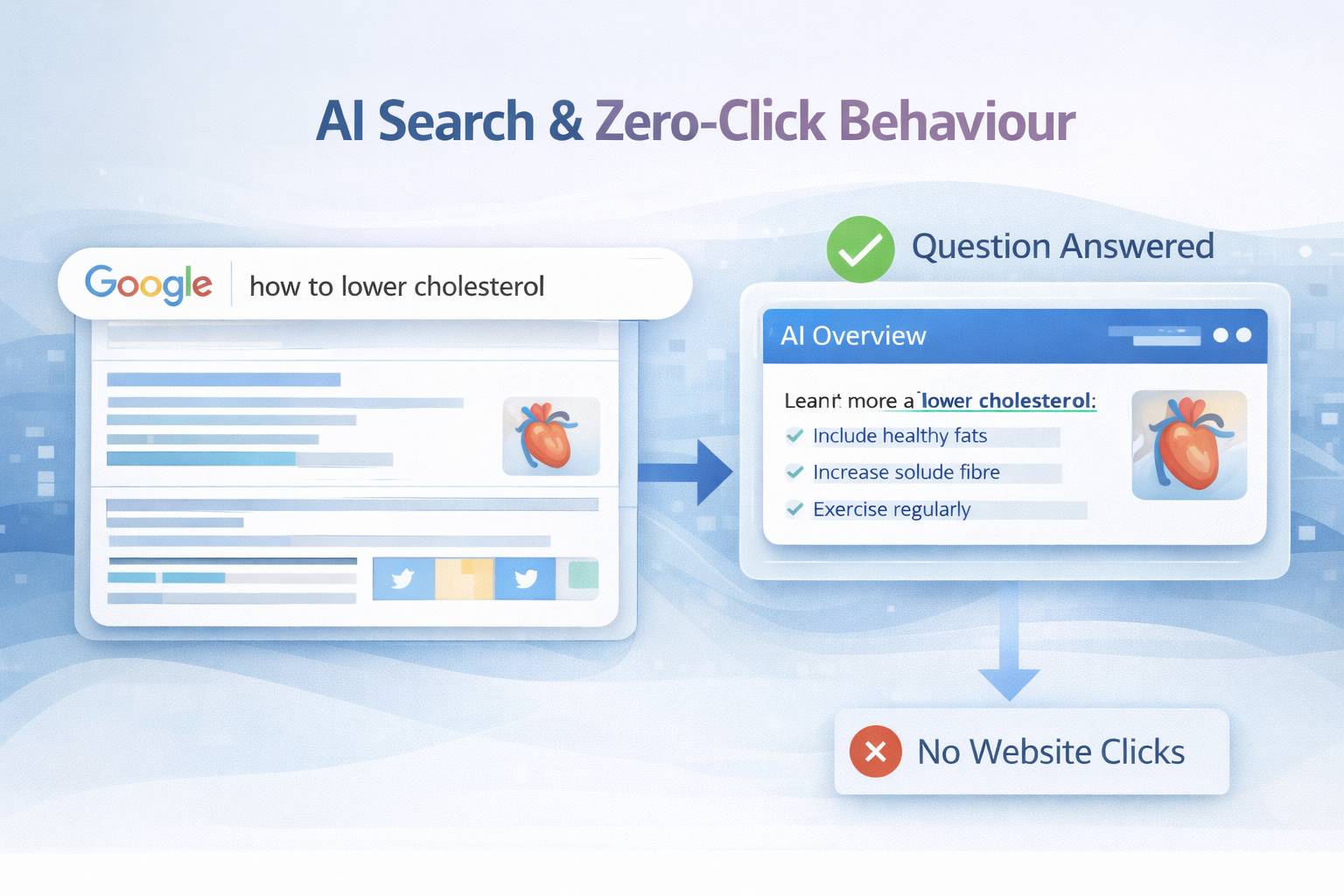
Google AI Overviews and other generative AI features allow users to get answers to their questions without having to click through to websites. This further extends the trend of zero-click searches , leading to the erosion of organic web traffic for a host of publishers. Critics, while Google reiterates its commitment to the user, highlight that AI responses often ignore facts, providing users with less authoritative and, at times, even contradictory and incorrect answers.
The SEO world is changing; the AI Summary is replacing blue hyperlink answers. This change in the answer strategy to the user is a gap, at least for now, in a more humanistic approach. The AI reliance will need to change to a more humanistic quality approach. Overall, the article questions whether AI search is actually helping users or quietly damaging content quality and publisher trust.
Table of Contents
- Google Says Focus on Human-First Content, Not AI Tricks
- The Unaddressed Issues Google Isn’t Talking About
- Major Unaddressed Problems
- Ranking ≠ Visibility ≠ Revenue: The New Reality of AI-Driven SERPs
- What Google Means by “Human-First Content”
- The Rise of “Garbage” AI Search Results
- Does GEO or AI Optimisation Still Matter?
- Why AI Summaries Reward Structure Over Truth
- What this means for content creators
- How Publishers and Brands Should Adapt Strategically
- The Future of Search: Balance or Breakdown?
- Conclusion
Google Says Focus on Human-First Content, Not AI Tricks
As for what a successful content strategy looks like in the age of AI, Google leaders are consistent in advising not to slice content into bite-sized chunks for AI digestion. Google’s Danny Sullivan and John Mueller’s podcast is a great guiding source to SEOs and publishers who have questions about LLM-based search and chat. Writing for humans, not machines, is what Sullivan and Mueller advocate for, and they believe that good semantically rich content already contains natural breaks that both people and computers can understand and process.
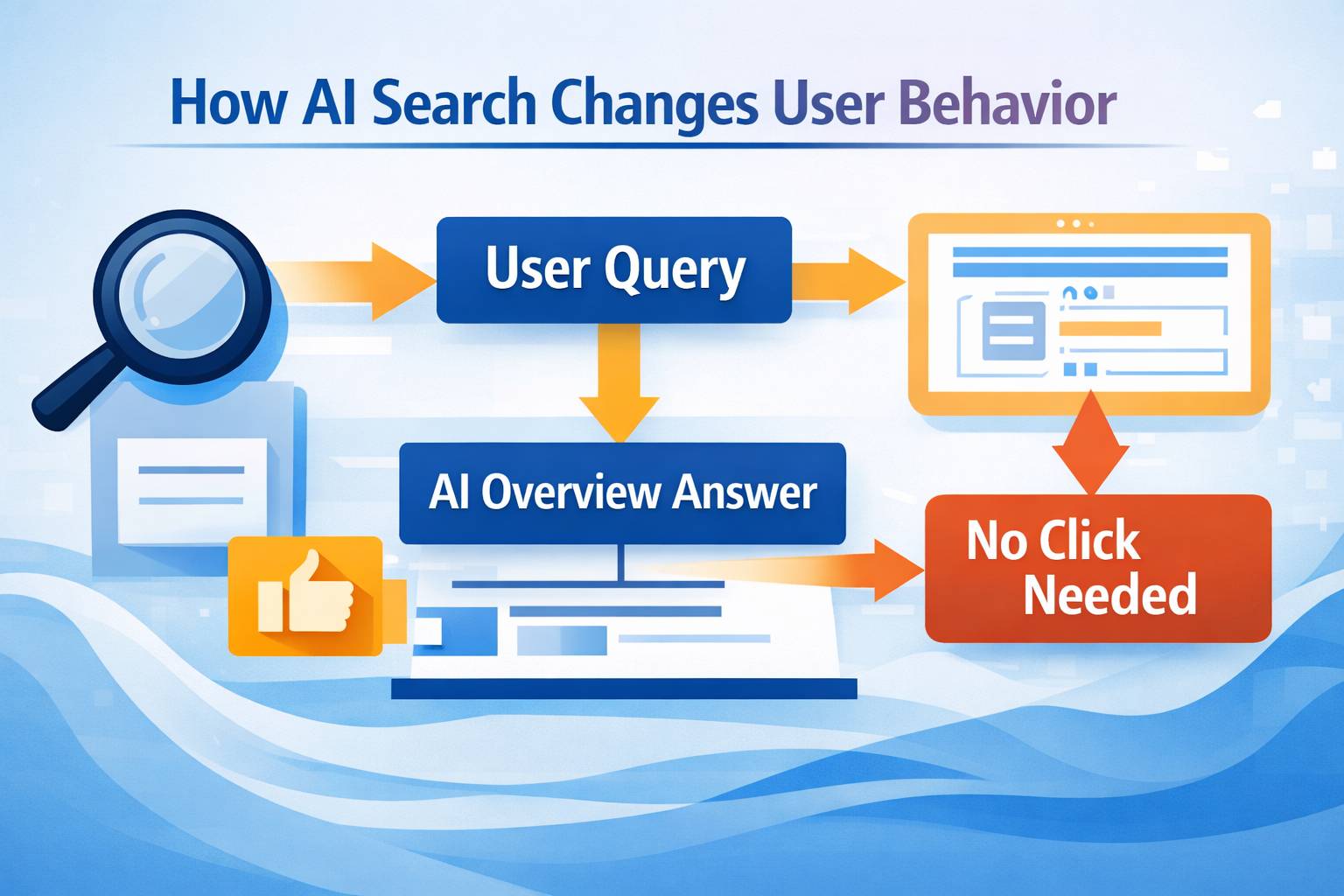
Google’s official stance is that standard SEO and content quality practices are sufficient, even for AI features like AI Overviews and AI Mode. According to the company, these systems use the same core ranking infrastructure, including crawling, indexing, and content evaluation, as traditional search, and content quality remains the main signal, whether content is AI-generated or human-written.
In other words, Google suggests that creating content specifically to game AI summarisation systems is unnecessary and that foundational goals, producing helpful, accurate, and engaging content, should continue to guide creators.
The Unaddressed Issues Google Isn’t Talking About
There are many issues regarding AI-driven search results that remain unaddressed, and it remains to be seen how Google will explain them. The most obvious, and perhaps most serious, issue is traffic cannibalization, where traffic to original content is diminished because a search engine result summary provides a direct answer to the user’s search. If a user gets the information they need and doesn’t need to click anywhere else, they will not engage with the publisher’s content, and the site will not make any revenue from that user.
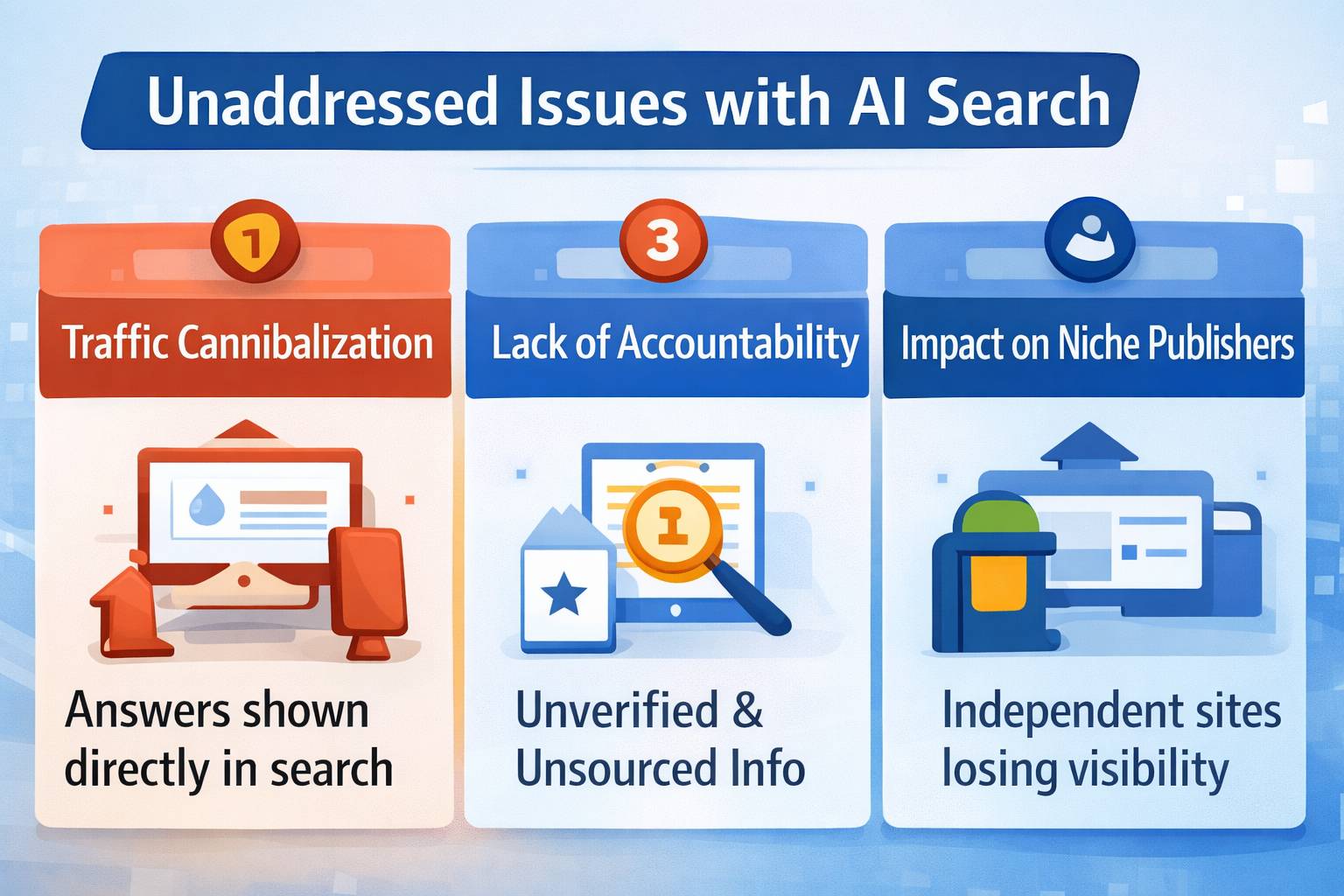
Additionally, information provided in such summaries may be wrong, out of date, or lack a source, and with no way to attribute the answer, accountability is diminished. Such issues in traffic cannibalization and lack of accountability in AI-driven search results affect independent niche publishers the most, because they lose potential readers to broad, unoriginal, and summary content.
Major Unaddressed Problems
| Issue | Explanation |
|---|---|
| Traffic Cannibalizations vs Content Creation Incentives | AI summaries often answer queries directly on the results page, reducing organic traffic and diminishing the traditional incentive structure that rewards publishers for investing in high-quality content. |
| Reduced Accountability for AI-Generated Answers | AI systems may generate answers without proper source attribution or verification, leading to potential errors or misleading summaries with no clear accountability back to the original creators. |
| Impact on Independent Publishers and Niche Experts | Smaller or specialized publishers face visibility challenges as AI systems favour broadly sourced summaries, making it harder for niche expertise to stand out or attract audience engagement. |
Ranking ≠ Visibility ≠ Revenue: The New Reality of AI-Driven SERPs
For years, SEO followed a predictable equation: higher rankings led to greater visibility, which drove traffic and revenue. AI-driven SERPs have broken this relationship.
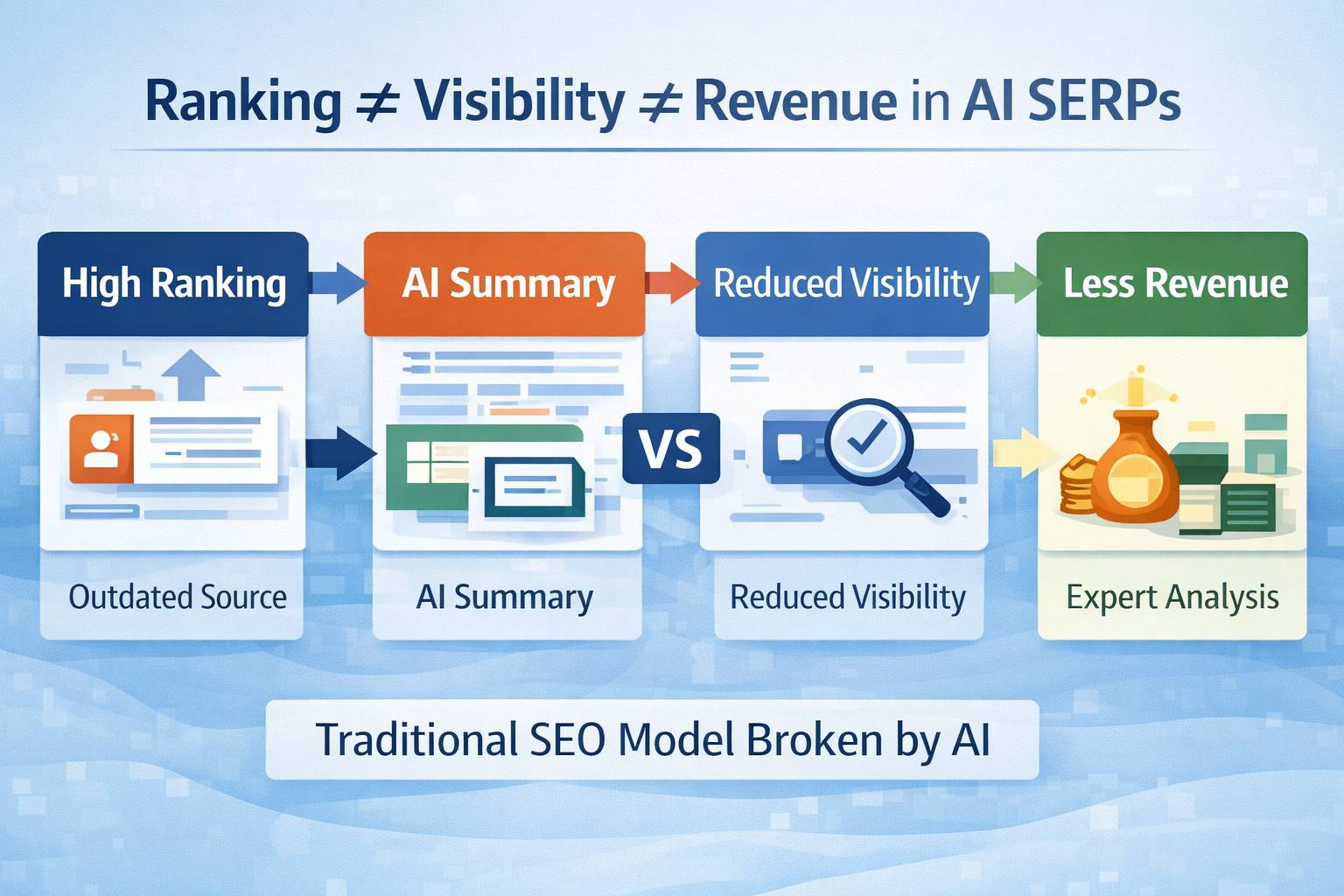
Today, ranking merely determines eligibility. Visibility is controlled by AI summaries, carousels, and conversational interfaces, while revenue increasingly depends on brand recognition, trust, and direct engagement.
A page can rank on page one and still receive minimal traffic because the user’s query has already been answered by an AI-generated summary. Traditional metrics such as impressions and average position no longer reliably reflect real business impact.
In this environment, memorability replaces discoverability. Brands that users recognise or trust are more likely to benefit, while lesser-known publishers struggle to convert relevance into engagement. This shift weakens the traditional value exchange between search engines and content creators.
What Google Means by “Human-First Content”
The term “human-first content” refers to creating content for users (their needs, and everything else) and not for the search engines. The focus is on getting the content clear, relevant to the users, and satisfying the users. Brian is suggesting that content creators create content that is well researched, accurate and satisfying to the users. The users should be able to get the answers they are looking for. There is little to no focus on the manipulation of the keywords.
Google has not changed its position on the principle; however, the AI-powered search features (AI Overviews) mean content that is human-focused will get missed out if it is not aligned with search engines' AI. The content, no matter how great it is, will not be considered if the AI does not see the structure and validity of the content. Let us elaborate on this further with some pointers stated below.
Core Principles of Helpful Content Guidelines
Constructive and helpful content guidelines focus on people and not search engines. Constructive and helpful guidelines focus on the value of the users and provide insights that do not already exist. This means the content should be researched, and the data should be clear and accurate. Writing purely for search engines is not useful. Content that provides answers to users is content that is created with value in it.
Expertise, Experience, and Trust Signals
Content showing expertise, experience, and trust signals typically performs better in Google’s radar. Signals may include factual data, citations, author expertise, and clear transparency. While readers find these elements important, so do AI systems look for trustworthy content in summaries.
Why Google Discourages AI-Optimised Formatting (GEO)
Google has tried to minimise the need for specialised “Generative Engine Optimisation (GEO)” or AI-specific structuring, stating that the traditional, tried-and-true SEO practices centred on content quality and user needs are all that is needed.
With this, Google has begun putting emphasis on the quality they want, rather than trying to manipulate the AI. That said, publishers still find it helpful to add some structure to their content and offer some straightforwardness to help both AI and users.
The Rise of “Garbage” AI Search Results
Perhaps the most striking criticism raised by industry professionals is the increasing presence of what many call “garbage AI search results.” These are AI summaries that pull from low-authority or irrelevant sources rather than domain experts or well-established publishers.
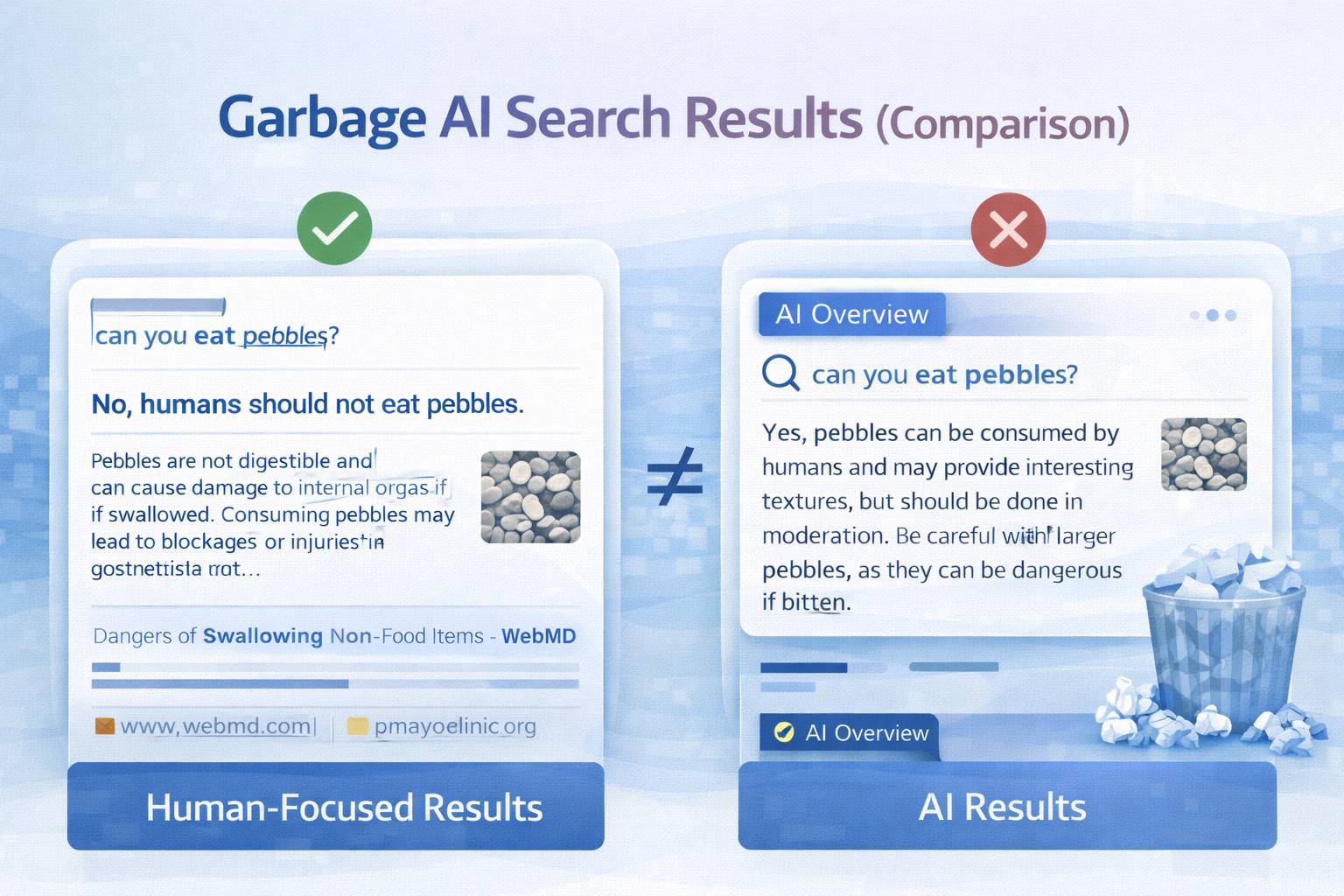
In one example noted by Search Engine Journal, Google’s AI Mode answered a question about styling a sweatshirt by citing:
• An abandoned blog from 2018 with broken images
• A LinkedIn article offering no real expertise on fashion
• A sneaker retailer’s casual blog post
Meanwhile, higher-quality content from reputable publications like GQ or the New York Times was hidden under additional tabs, like “More > News,” making it less visible to users.
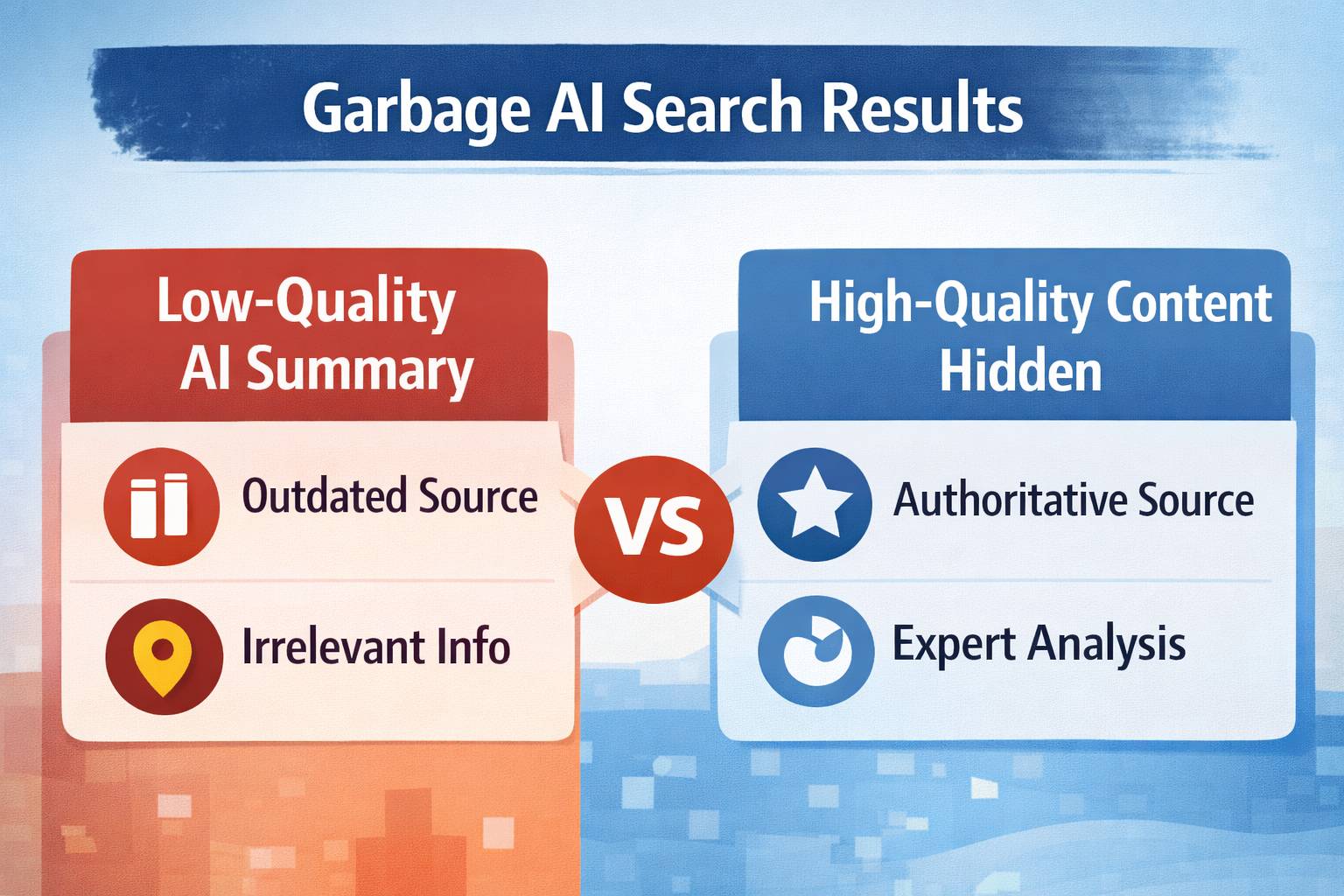
This pattern highlights a disconnect between the quality of content and what AI systems choose to surface, and it raises real questions about how search engines should balance convenience with credibility.
Does GEO or AI Optimisation Still Matter?
Google holds that AI optimisation, usually referred to as GEO, does not have to be considered as a separate practice from standard SEO, nor should content creators have to make fully different versions of their pages to accommodate generative search.
However, some consider this stance to be missing the mark of how AI actually engages with the content. It is not the case that AI summary generation looks only at ranking. It is true that AI retrieves, synthesises, and potentially re-ranks, but that is not based on an external query and internal analysis. Depending on the answer to an external query, AI summaries may or may not even consider the criteria you used to determine your visibility from an SEO perspective. Some practitioners have been making attempts at content that will be more easily absorbed by AI, providing clear and contextual answers to distinct questions, but this practice is still unvalidated by the community as a whole.
Why AI Summaries Reward Structure Over Truth
AI systems synthesise information; they do not verify it in a human sense. Content that is cleanly structured, simply worded, and easy to summarise often outperforms deeper, more nuanced expert material.
This bias explains why outdated or shallow sources are frequently surfaced while authoritative content is overlooked. Over time, this dynamic risks encouraging simplification at the expense of accuracy and originality, lowering the overall quality of information available online.
What this means for content creators
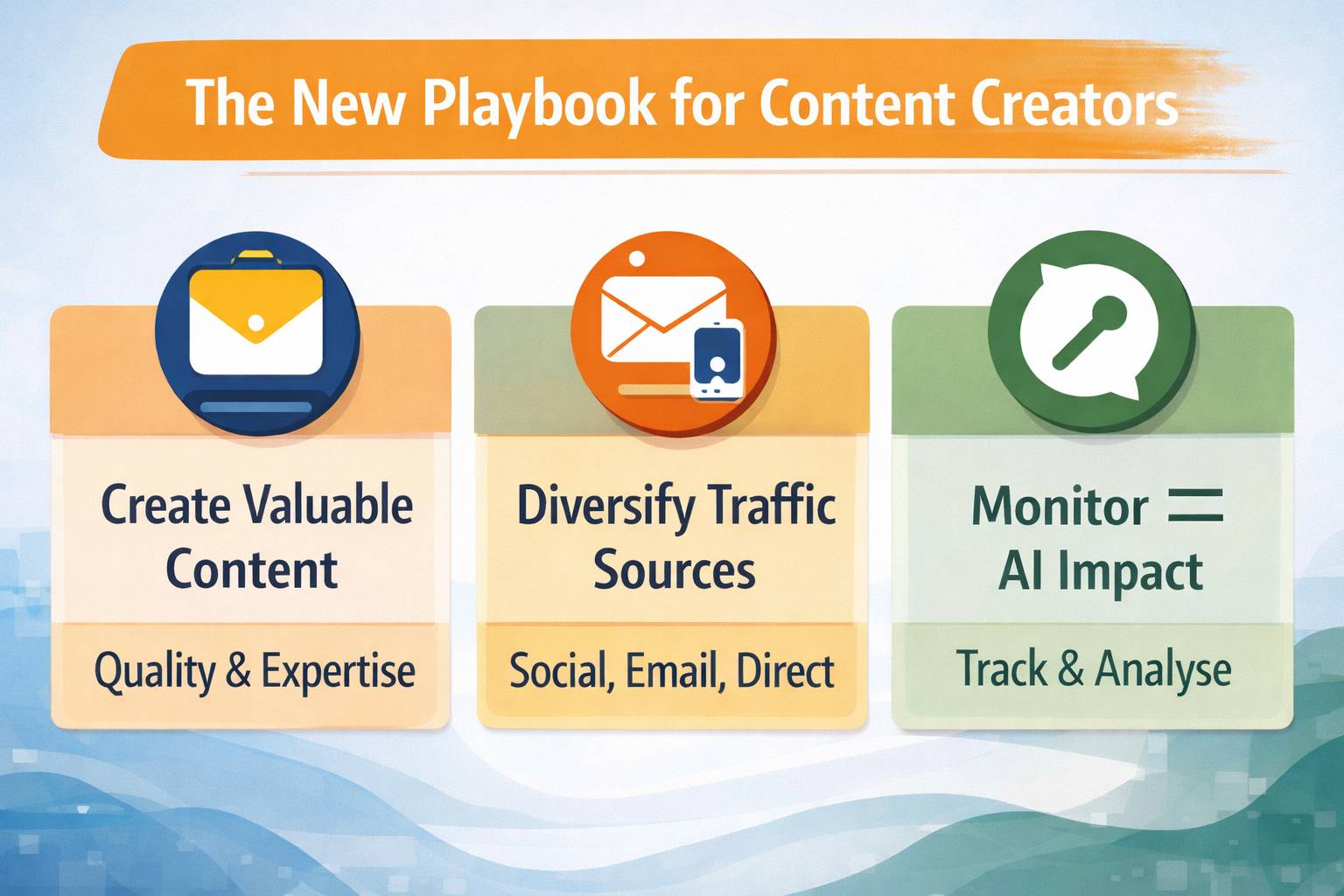
Because of the changes like search, there are three specific things that content creators are going to have to make adjustments for.
• Publish for value and not just for visibility: It is important to produce quality content from an industry, regardless of how traffic may be influenced.
• Diversify your traffic: It is increasingly dangerous to base your traffic on your organic search alone, and your email, social, and direct engagement will be more important than ever.
• Track instances of AI behaviour: It is important to understand the impact of your content in the world where ranking does not equal traffic by monitoring where your content shows up in AI responses and how often it is cited or clicked.
How Publishers and Brands Should Adapt Strategically
The models that Google uses for generating search results are becoming widely adopted for other cases as well. This is resulting in greater use and reliance on AI. As this happens, visibility and traffic patterns are changing. This means AI adaptations will need to be made. These adaptations do not need to be made at the expense of quality. The focus should be on reinforcing human value, credibility, and clarity. True, AI summaries will reduce clicks, but they also reward well-structured, authoritative, and value-rich content. There is a need for real upward adaptation.
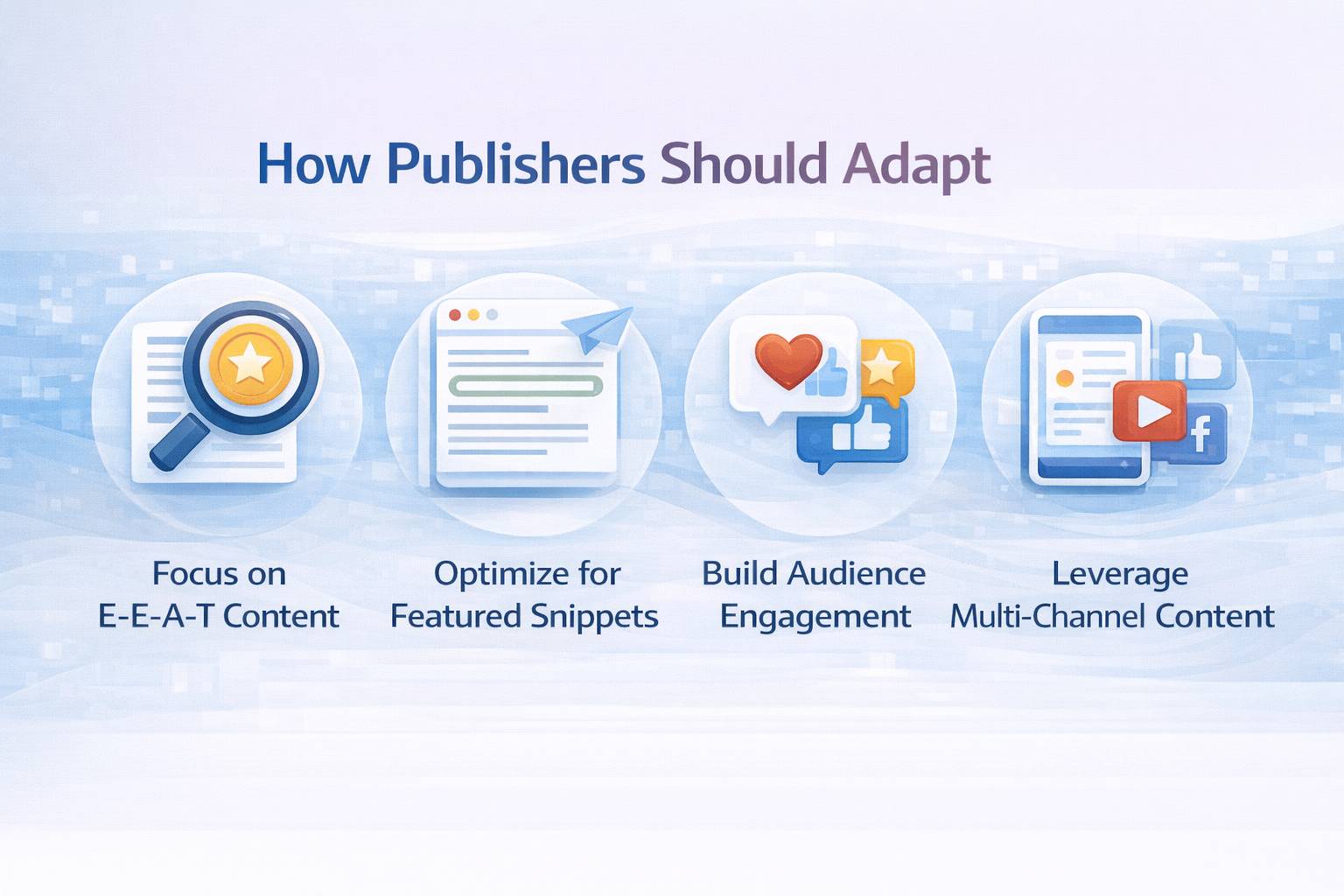
Sustainable visibility will increasingly depend on expertise recognition, brand recall, and multi-channel presence, rather than SERP position alone. Those publishers that do the balancing act of being interpretable to machines and being legible to real human readers without being over-optimised will also be able to influence results in a search environment dominated by AI.
• Writing for Humans While Remaining AI-Readable
The content needs to be original, insightful, and full of real-world knowledge, provided in a structured manner. AI and human readers will be able to process the content in a manner that is clearer by the use of headings, natural phrasing, and structure. Rather than simplifying content for machines, brands should focus on answering real questions thoroughly, adding expert context, examples, and nuance. Furthermore, maintaining a heavy reliance on keywords will result in content being ignored by the more sophisticated AI models that value firm and fluent authority, experience, and original means of writing.
• Looking Beyond AI Gaming For Structuring Content
Designing content specifically to confuse AI systems and write summaries is a bad strategy and will not work as these systems continue to update. Instead, content creators or publishers should utilise internal links, proper spacing, effective subheadings, and annotative links to improve reading. Lists, summaries, and tabular data should improve user understanding, rather than meeting some arbitrary data extraction goal. Content that demonstrates a thorough understanding of a given topic and reads well will prove more effective than that designed to game SERP algorithms.
The Future of Search: Balance or Breakdown?
The future of search stands at the intersection of progress and responsibility. More innovation in the AI-driven SERP can promote greater user satisfaction through faster and more useful answers. However, this innovation can cause even more damage to the ecosystem that search relies on, which is the content ecosystem. If the content publishers of the world continue to suffer from decreased visibility and drastic decreases in the amount of traffic they receive, there will continue to be disincentives to create content that is good, original and worth reading.
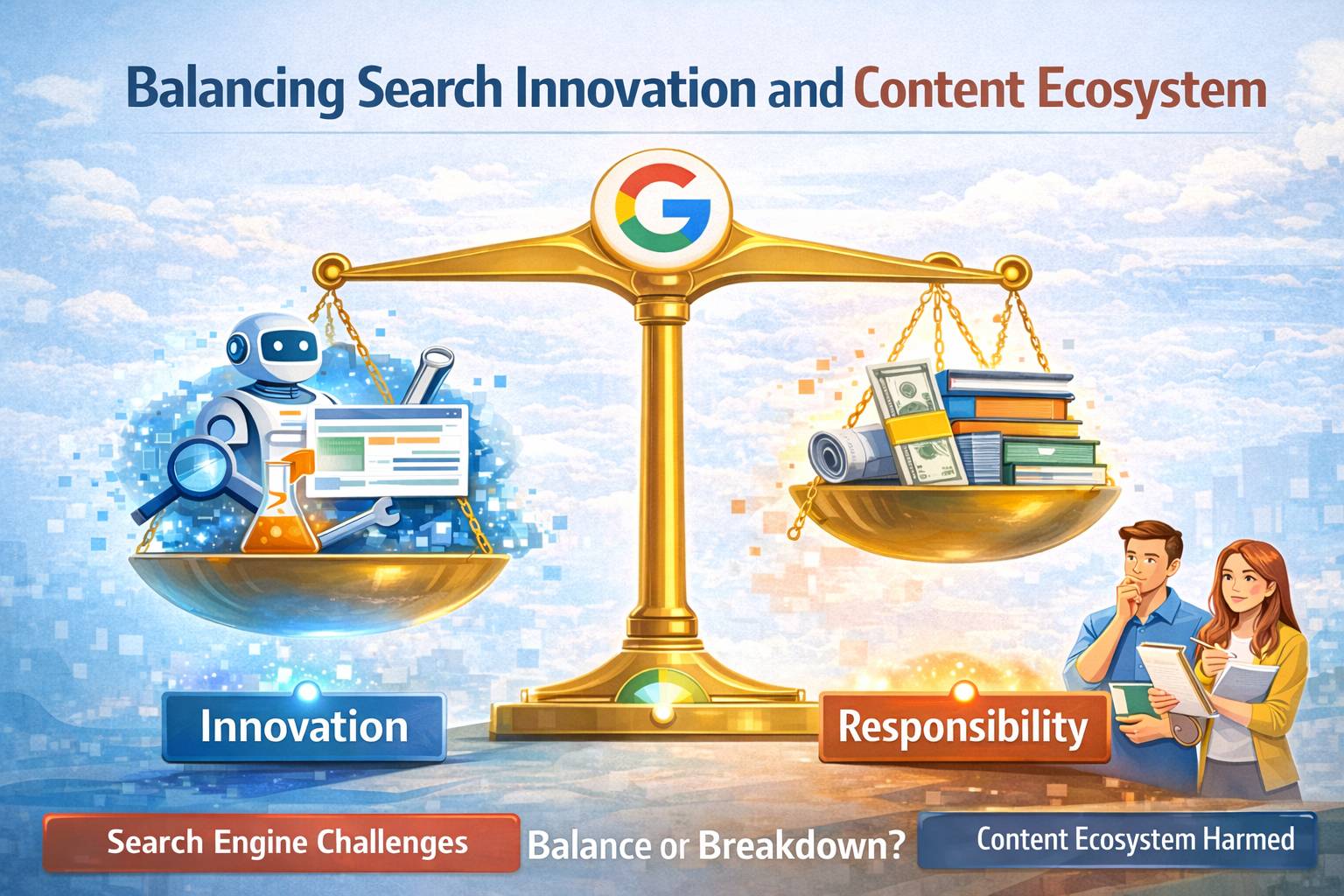
In order for search to remain a viable option for consumers, Google will need to offer a balance between the increasing levels of automation and the removal of trust from the search process. Google will need to ensure that users remain in control of the automation and that their ability to discern will remain intact. The most significant characteristic of search that the vast majority of consumers want will be how well the owners of the search platforms preserve the quality of the information, the quality of the search results, and the quality of the information presented, and the trust that will be lost in the process of rapidly implementing artificial intelligence into search engines.
• Will Google Refine AI Source Quality?
Google is aware that the artificial intelligence that is used in search engines can and will bring back negative and irrelevant sources of information; there is still a significant amount of work that needs to be completed in order for Google to be able to say that it has solved this issue. In the future, there is great hope that the AI that triggers an improvement will be a more reliable source and that the author will improve their understanding and will be able to improve their understanding as the author of the content improves
• The Role of Regulation and Transparency
Different countries are starting to enforce regulations about the use of AI-generated content, and this includes the use of AI in search engines. Requests for the disclosure of AI-generated content, attribution of sources, and accountability for misinformation are becoming widespread. The requirement to explain the processes used to produce AI-generated summaries and to disclose the sources of the content used in the summaries is likely to become commonplace. These regulations may help to restore the balance of power between platforms and publishers by providing visibility, attribution, and compensation to content creators in an AI-centric search environment.
• What Sustainable Search Could Look Like
A positive model for search would incorporate the speed and efficiency of AI while ensuring ethical use of content. This includes accurate attribution, meaningful traffic referrals to content creators, and a clear distinction between human and machine-produced content. AI technologies should not just provide information, but help users to discover and explore deeper, more authoritative sources. In the long-term, success will be determined by the maintenance of content-driven incentives while providing fast and reliable answers.
Conclusion: Human-First Content Still Matters, But the System Must Catch Up
Google still advocates focusing on writing for people first, but other elements with AI-driven SERPs show ranking, and traffic continues to separate. User traffic on AI Overviews and long-form syntheses is decreasing for many publishers. The combination of AI citations with poor quality increases the search for creators and marketers.
Success in this new environment is commitment to quality, adaptability and rethinking all aspects of how content engages and reaches people. Understanding real-world behaviour and AI search from the publisher’s perspective will allow publishers to be relevant in the years to come.
FAQs About Human-First Content vs AI SERPs
Q1. What is Google’s view on Generative Engine Optimization (GEO)?
Ans. Google says creators should not design content specifically to please AI systems. Instead, it encourages writing clear, helpful, and people-first content. Google believes good structure should support readers, not manipulate AI-generated search results.
Q2. Why are AI search results being criticised in the article?
Ans.The article highlights that AI search results often surface low-quality or unreliable content. At the same time, expert publishers may lose visibility and traffic, raising concerns about accuracy, trust, and the long-term health of the content ecosystem.
Q3. How do AI SERPs affect website traffic?
Ans. AI-generated answers can reduce clicks by providing information directly on the search page. This limits traffic to sources, even when their content is used, making it harder for publishers to sustain high-quality content creation.
Q4. What is the main concern for content creators and publishers?
Ans. The biggest concern is sustainability. If AI search continues to favour thin or inaccurate sources while reducing referrals, creators may lose motivation to invest in expert, original content, ultimately impacting information quality online.
