

Summary
Pareto Principle of SEO: The 80/20 rule suggests that 80% of your organic traffic, conversions, and ranking improvements come from 20% of your SEO efforts — such as high-impact pages, keywords, and backlinks.
Optimizing search engines can be very overwhelming when it is filled with millions of keywords, a never-ending stream of fresh algorithms, audits of the process, calendars of the content, links that backtrack, and stream analytics. It appears that the success of SEO can only be achieved when doing everything. But what if the majority of your results can be achieved by only doing a few simple and effective actions?
Table of Content
- What Is the Pareto Principle?
- What Is the 80/20 Rule in SEO?
- Why the Pareto Principle Matters More in Modern SEO
- Pareto Analysis: Finding Your High-Impact SEO Opportunities
- Using the Pareto Principle for SEO Content
- Technical SEO Through the 80/20 Lens
- On-Page SEO: Less Work, Bigger Results
- Link Building and the Pareto Principle
- Applying the Pareto Principle for SEO Strategy Planning
- Common Mistakes When Applying Pareto SEO
- Pareto Principle vs Traditional SEO Mindset
- Future of SEO and the 80/20 Rule
- Conclusion: Smarter SEO, Not Harder SEO
- FAQs About Pareto Principle
The Pareto Principle, also called the 80/20 rule, simplifies this problem to all of their modern-day SEO issues.
In this blog, we are going to break down is Pareto Principle of SEO, why it is important today, and how Pareto SEO strategies can lead to sustainable growth and help you avoid burnout.
What Is the Pareto Principle?
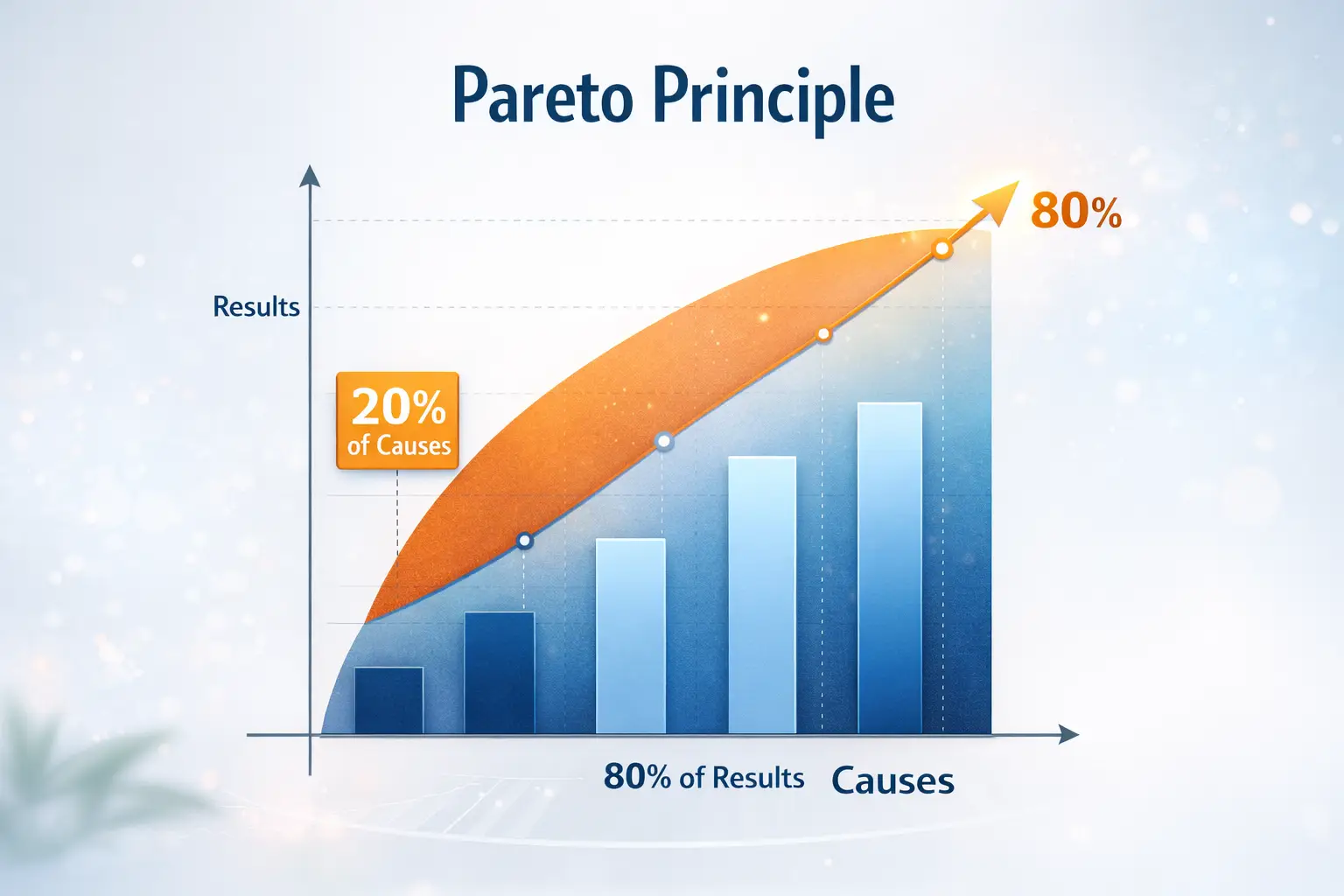
The Pareto Principle is best described as 80% of results come from 20% of causes. This principle can be applied to basically every industry, and work in technology, productivity, and marketing. It's based on the work of economist Vilfredo Pareto.
Simply, it means that:
- A results-oriented small effort is ideal.
- Not every effort is worth the time.
In reference to digital marketing, particularly with SEO, it becomes immensely valuable.
What Is the 80/20 Rule in SEO?
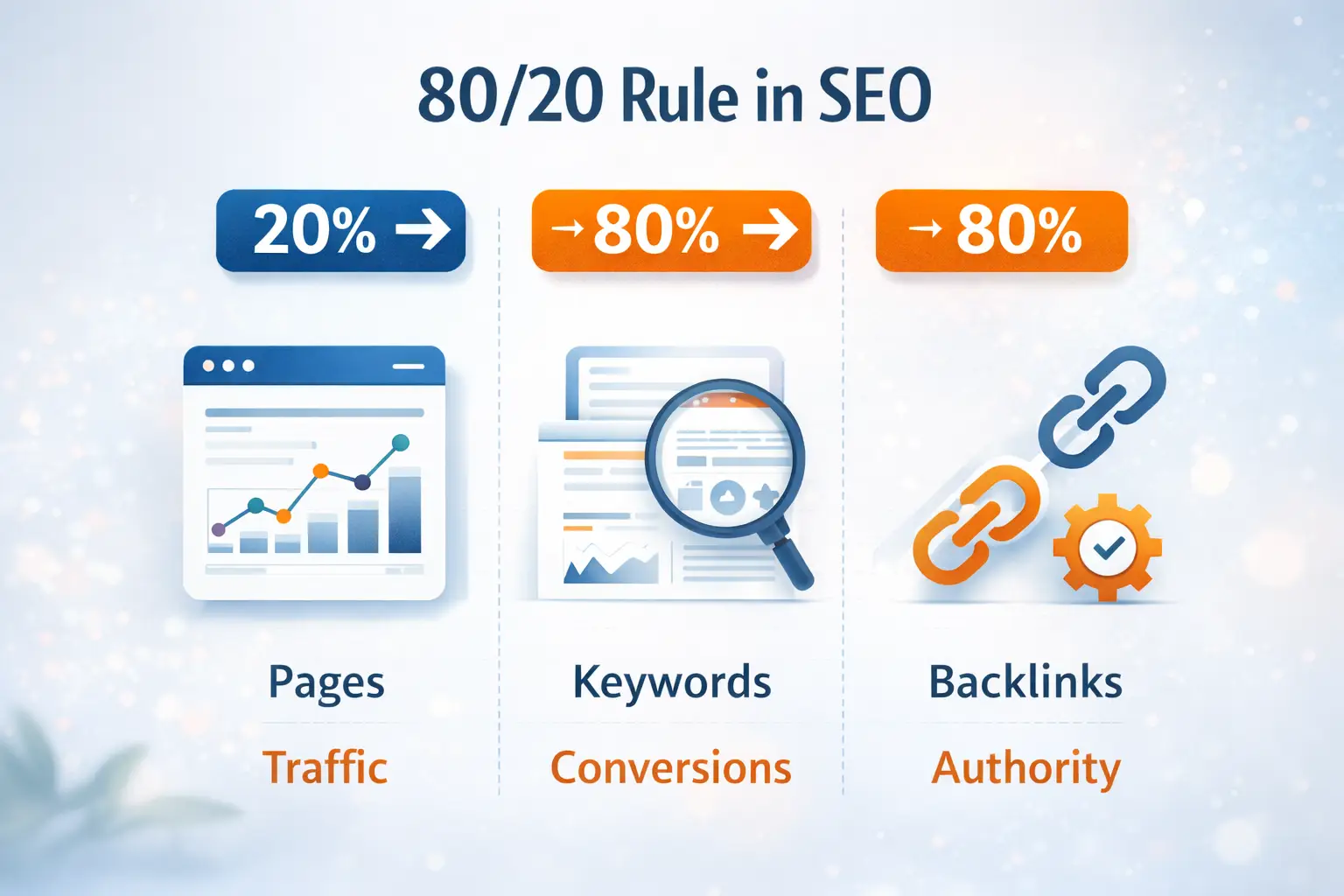
When studying Pareto SEO, students traditionally learn about the 80/20 rule, which states that:
- 80% of the traffic is driven by 20% of the pages of your website
- 80% of conversions from 20% of keywords
- 80% of ranking gains from 20% of optimizations
- 80% of authority from 20% of backlinks
In the above context, the SEO Pareto Principle means that instead of attempting to divide your efforts in multiple areas of SEO, focus on the aspects that matter most to see the highest ROI.
Why the Pareto Principle Matters More in Modern SEO

SEO has changed. While once the sheer volume of quality pages was the objective, with AI-driven search, zero-click results, and growing competition, the focus shifts to efficiency, and thus, Pareto analysis becomes vital.
We see search engines reward depth and relevance rather than overstuffing content with keywords. Adding pages to your site won’t necessarily increase your overall traffic.
Tighten up your website’s technology to bring about big changes rather than overloading it with content.
A single, powerful page is more effective than multiple mediocre pages in dominating a topic cluster.
SEO is about doing the right things rather than doing more things. It’s about quality over quantity.
Pareto Analysis: Finding Your High-Impact SEO Opportunities

The most important aspect before using the Pareto Principle is to develop a focus, and that’s where Pareto analysis comes in.
1. Find Your Highest Traffic Pages
Look through your website data and report:
- Pages getting the most organic visitors
- Pages achieving the highest conversion rate
- Pages that are ranking top, but not the top three
These are usually part of the vital 20%.
2. Look Into Keyword Data
Websites usually rank for hundreds or thousands of keywords, but not most of these will bring real value.
Look for:
- Keywords that are driving conversions
- Keywords that have high impressions, but have a low CTR
- Keywords ranking positions 4–10
These are usually the low-hanging fruit.
3. Check Your Backlink Sources
In a lot of situations:
- 20% of backlinks provide most of the authority
- One or two domains have authority
Improving the connection with these sources may be better than doing mass link-building.
Using the Pareto Principle for SEO Content
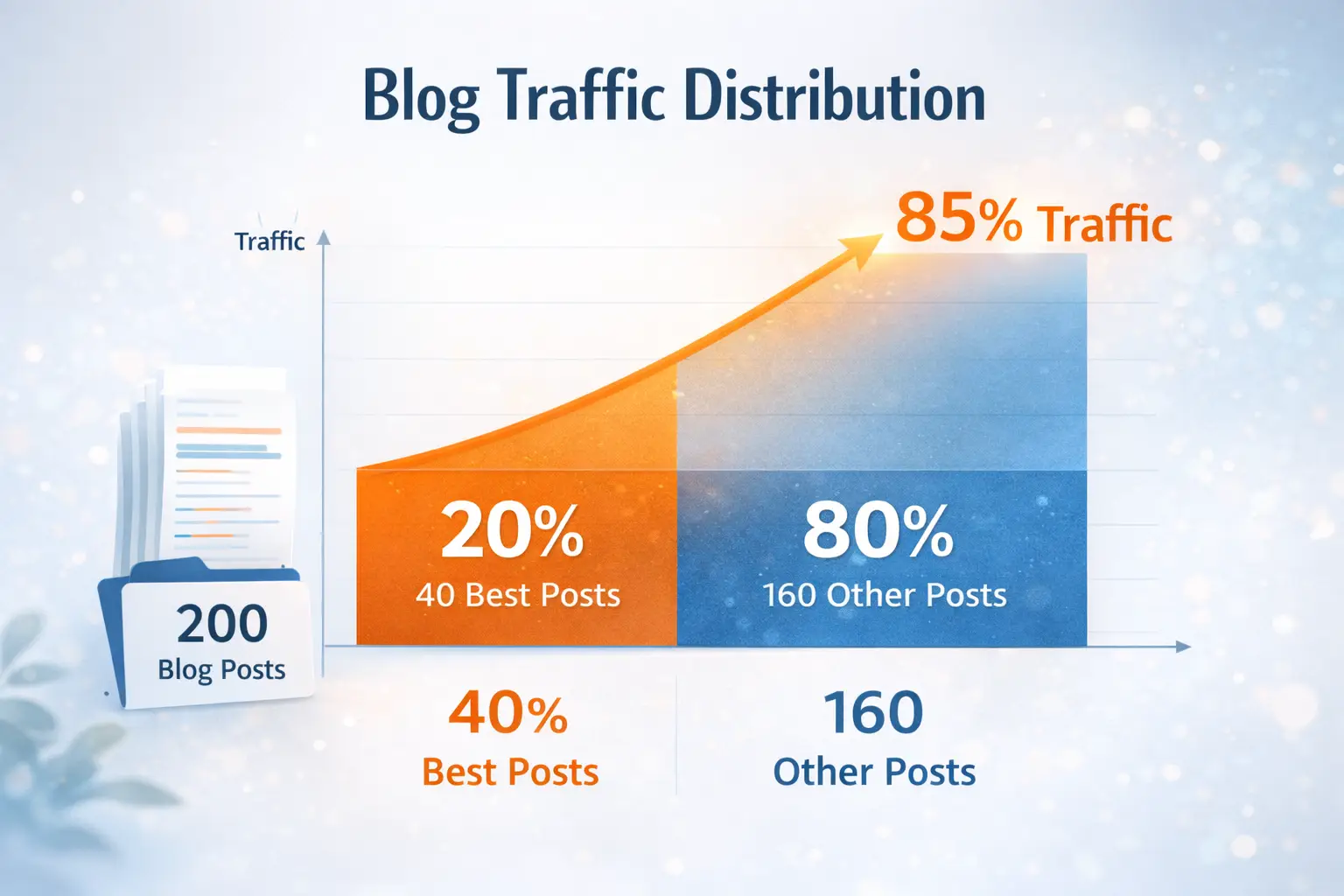
Pareto SEO is focused on the most where Pareto really shines. 80% of Traffic from 20% of Content
Most sites find that:
- A small number of blog posts drive most of the traffic.
- Evergreen content performs better than numerous shorts.
- Driving more growth comes from updating older posts than from creating new ones.
Rather than that, you should continuously publish (on):
- Refreshing older but higher traffic posts.
- Content that is already ranking.
- Bettering the current readability and intent match.
This is the optimum performance of the Pareto Principle of SEO.
Technical SEO Through the 80/20 Lens
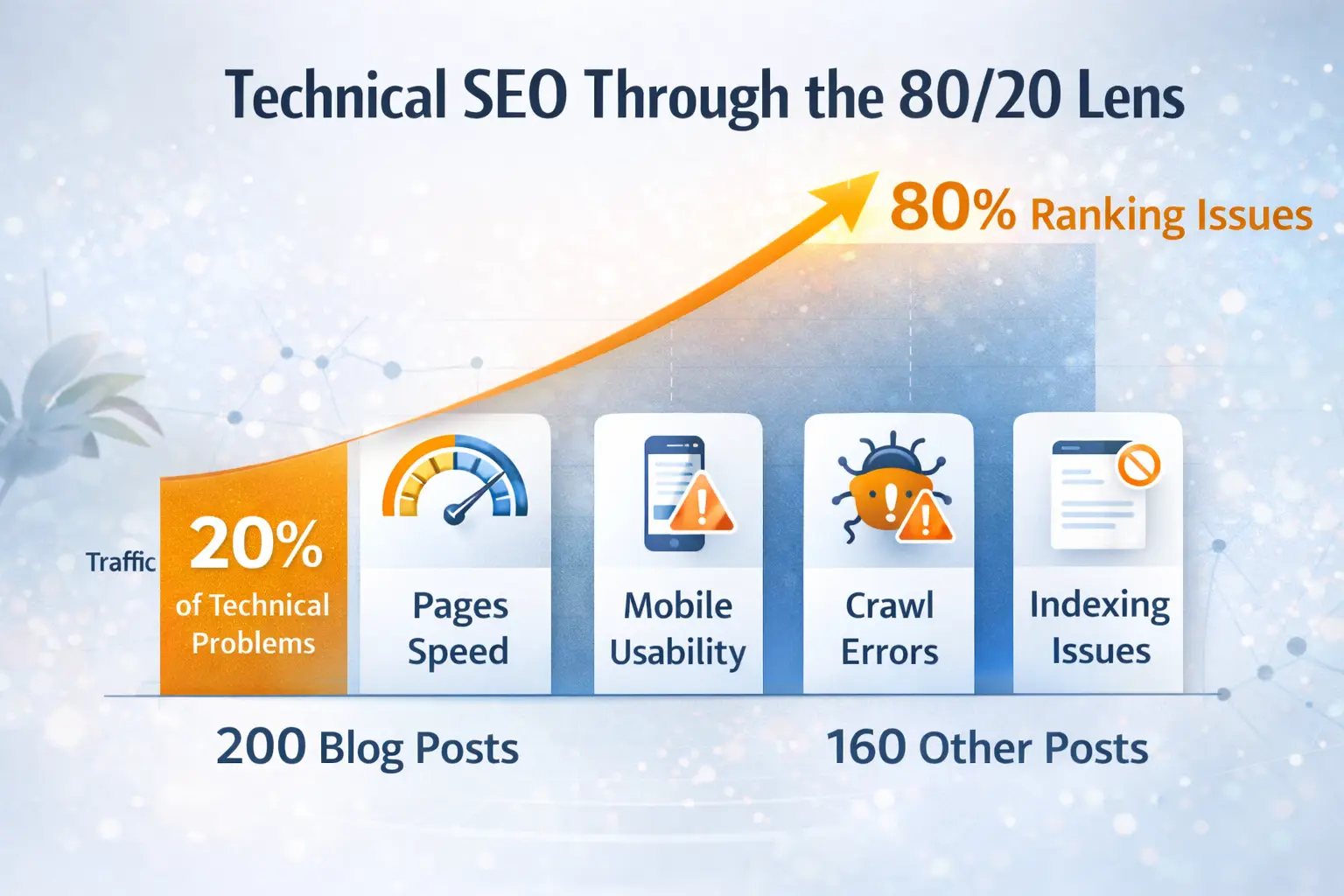
You don’t have to do it all; you can start small.
In many cases:
- 20% of the technical problems present are responsible for 80% of the ranking issues.
- High-impact technical fixes are:
- Page speed issues
- Mobile usability problems
- Errors related to indexing and crawling
- Lapses in internal linking
The more you address these issues, the more the negative impact of minor changes is compensated.
On-Page SEO: Less Work, Bigger Results
In on-page SEO, the 80/20 rule is evidenced clearly.
Concentrate on:
- Optimising your Title Tags for the pages that get you the most impressions.
- Improving the click-through rate (CTR) of your site with better Meta Descriptions.
- Strengthening Internal Links to your top URL.
- Additional content structure on pages with Headings and FAQs.
You don’t have to focus on every single page, just the ones that matter.
Link Building and the Pareto Principle
Some backlinks are better than others.
Applying the Pareto principle, you often find:
- A handful of high-authority links shift the positions of the most keywords
- Quality always beats quantity
Instead of a scattergun approach, try:
- Digital PR
- Mentions from industry authorities
- Content that attracts organic citations
This fits with the Pareto SEO principle perfectly.
Applying the Pareto Principle for SEO Strategy Planning
This is how you construct your SEO plan based on the Pareto Principle:
Step 1: Audit
Determine:
- Best pages
- Best keywords
- Best conversion paths
Step 2: Prioritise
Consider:
- What actions are likely to improve rankings the most, the quickest?
- What pages already have velocity?
Step 3: Optimise
Focus your efforts on:
- Enhancing existing success
- Streamlining processes
- Simplifying and improving relevance
This minimises effort and maximises growth.
Common Mistakes When Applying Pareto SEO
Pareto SEO is powerful, but can also be dangerous when misapplied.
Refrain from:
- Completely disregarding long tail keywords
- Missing out on creating new content
- Over-optimising pages that already dominate
The goal is equilibrium: the 80/20 rule should set your focus, but should not stifle new ideas.
Pareto Principle vs Traditional SEO Mindset
| Traditional SEO | Pareto SEO |
|---|---|
| Publish more content | Optimize high-performing content |
| Target many keywords | Focus on high-converting keywords |
| Build many backlinks | Earn authoritative backlinks |
| Spread effort everywhere | Prioritize high-impact pages |
The Pareto Principle of SEO shifts the mindset from volume to value.
Future of SEO and the 80/20 Rule

As AI-driven search grows, the Pareto Principle will become even more relevant.
AI systems prioritise:
- Clear, authoritative answers
- Trusted sources
- Content depth over frequency
This means the top 20% of content may soon capture even more than 80% of visibility.
Also Read - Best AI SEO Tools in 2026: Smarter Optimisation with AI-Powered Strategies
Conclusion: Smarter SEO, Not Harder SEO
The Pareto Principle proves that SEO success isn’t about doing everything. It’s about doing the right things. By applying the 80/20 rule, embracing Pareto analysis, and focusing on Pareto SEO, you can unlock organic growth with less effort and more precision.
In competitive industries where consumers have limited attention spans, successful brands know where to focus their efforts. Use the Pareto Principle of SEO to build visibility, not as a shortcut, but as a smarter way to strategise for the long haul.
FAQs About Pareto Principle
Q1. How does the Pareto Principle apply to keyword strategy in SEO?
Ans. In SEO, the 80/20 rule often means that a small percentage of keywords drive most organic traffic and conversions. Identifying and optimising these high-impact keywords helps allocate resources more effectively.
Q2. Can the 80/20 rule help reduce SEO workload without hurting results?
Ans. Yes. By focusing on the most impactful pages, backlinks, and content types, SEO teams can avoid spreading efforts too thin and still achieve stronger, more consistent organic growth.
Q3. What SEO metrics are best for conducting a Pareto analysis?
Ans. Traffic, conversions, rankings, backlinks, and engagement metrics like dwell time are commonly analysed to identify the 20% of efforts producing 80% of results.
Q4. Is the Pareto Principle useful for content optimisation as well?
Ans. Absolutely. Often, a small group of existing blog posts or landing pages generates most organic traffic, making content refreshes and optimisation highly effective.
Q5. Does Pareto SEO work for small websites or only large ones?
Ans. Pareto SEO benefits websites of all sizes. Smaller sites often see quicker wins by prioritising high-performing pages and keywords instead of trying to optimise everything at once.
