

In an era where digital ads are everywhere, getting eyeballs alone is no longer enough. As marketers, the real goal is converting those impressions of the passive views of your ad into meaningful actions:
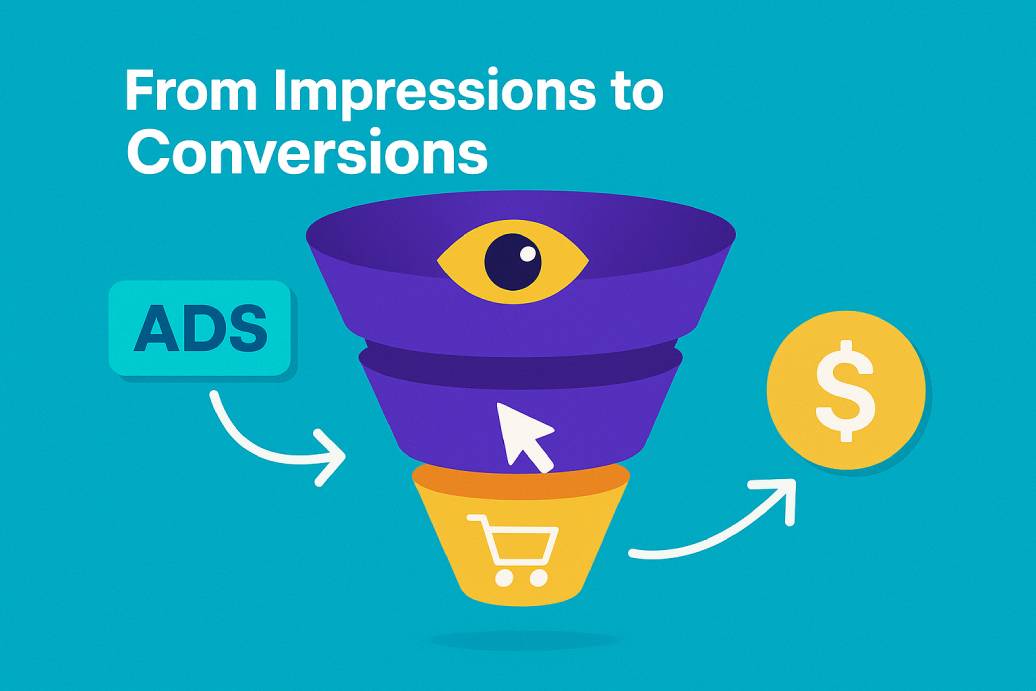
clicks, leads, sales. Yet many ad campaigns linger in the realm of visibility without ever crossing over into high conversion, bleeding budget without capturing value.
Table of Contents
- Why Impressions Are Only the First Step
- Understanding the Digital Ad Funnel
- Key Concepts & Metrics You Need to Master
- Five Key Pillars to Turn Impressions into Conversions
- Real-World Examples / Case Studies
- Putting It All Together: A Step-by-Step Workflow
- Common Challenges & How to Overcome Them
- Emerging Trends & Future-Thinking
- Key Takeaways
- Final Thoughts
- FAQ About Ad Impressions Into Conversions
This article will walk you through how to move from impressions ➝ clicks ➝ conversions. We’ll cover strategy, tactics, measurement, and real-world examples so that your ads not just get seen, but drive ROI.
Why Impressions Are Only the First Step
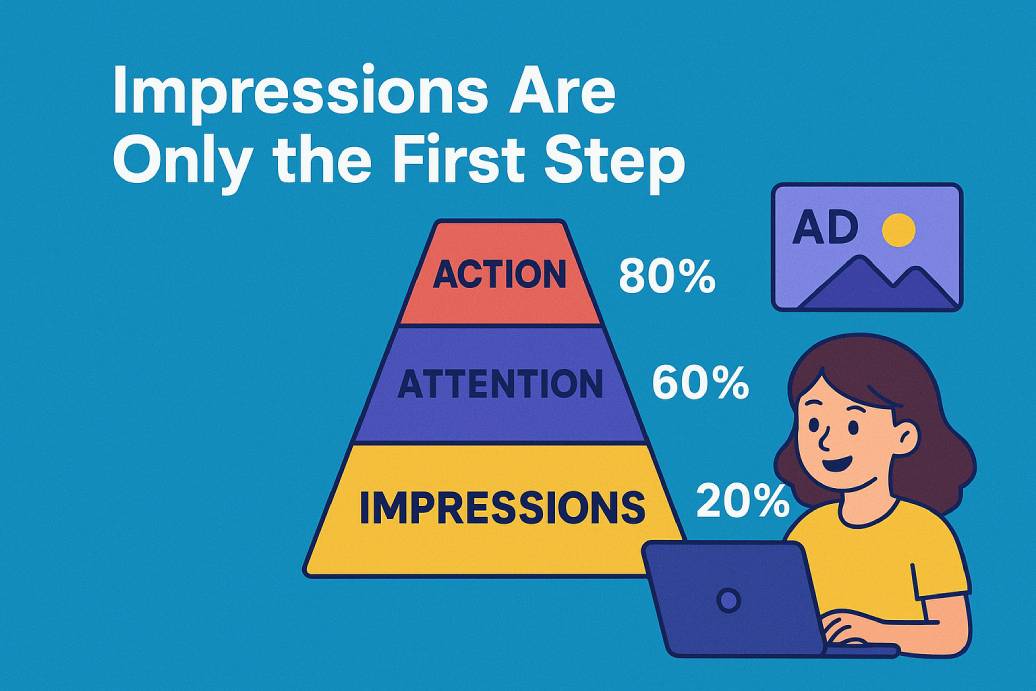
Impressions = number of times an ad is shown to someone. They are valuable for brand awareness, reach, and top-of-funnel metrics. But:
- Impressions don’t guarantee attention. Someone might glance and ignore.
- Impressions alone don’t guarantee interest or action.
- High impressions with low engagement can be costly and inefficient.
To convert, you need to move people down the funnel: from awareness → interest → desire → action. That means optimizing each touchpoint, the ad itself, the targeting, the landing page, follow-up to reduce friction and make it easy to say "yes."
Understanding the Digital Ad Funnel
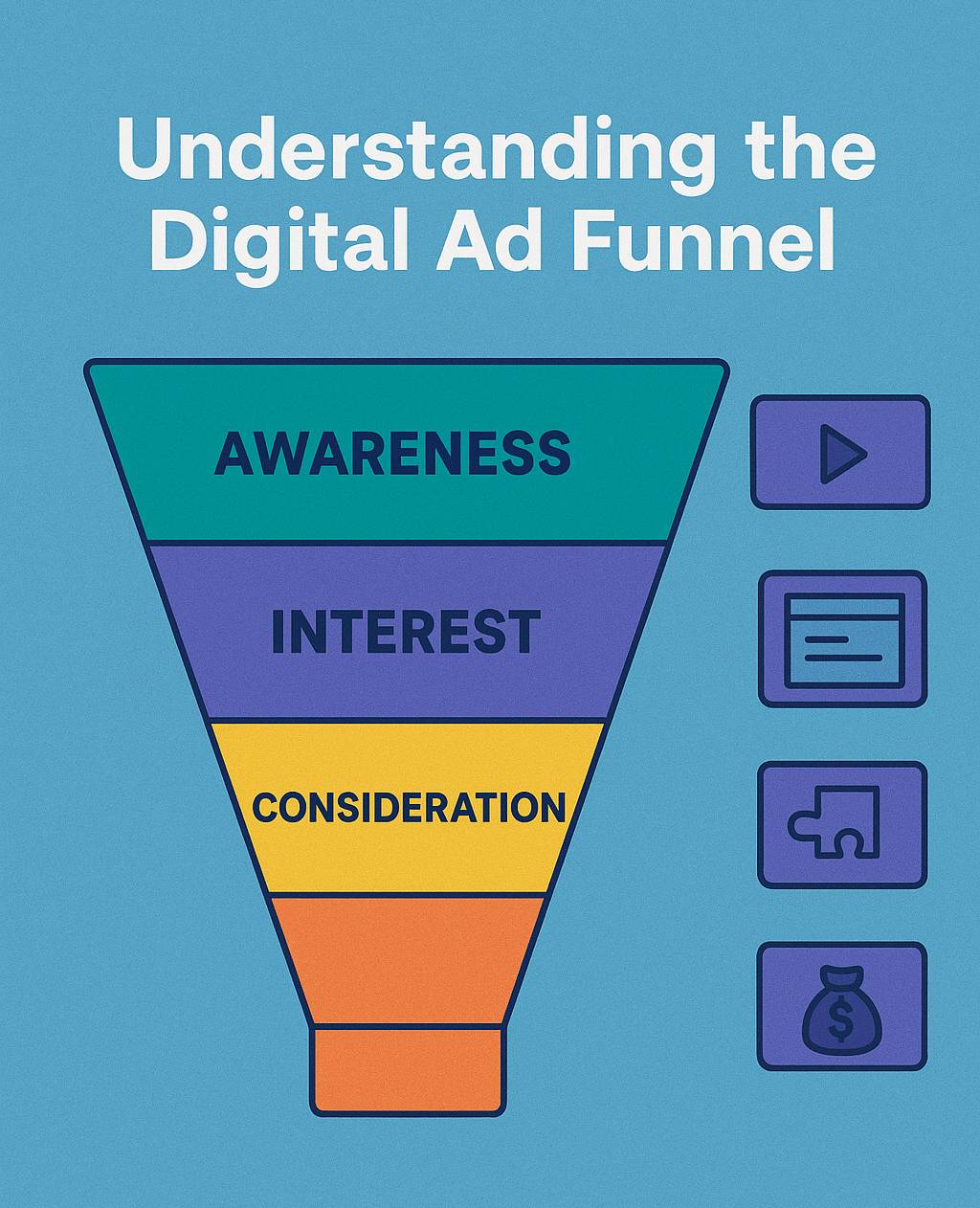
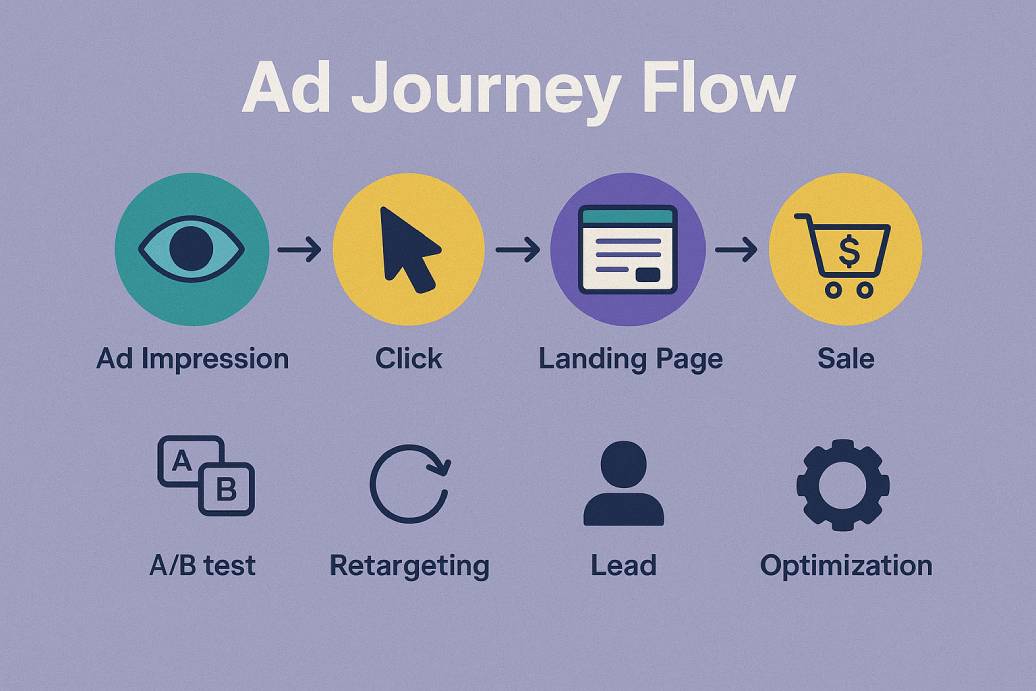
Before diving into strategies, it’s essential to understand the digital ad funnel:
- Awareness (Impressions): The stage where users see your ad for the first time.
- Interest (Engagement): Users click on your ad, watch a video, or visit your landing page.
- Consideration (Leads): Users evaluate your offering and may sign up for newsletters, free trials, or inquiries.
- Conversion (Sales): The ultimate goal—turning visitors into customers.
The challenge is to guide users smoothly through each stage, minimizing drop-offs and maximizing conversions.
Example: Imagine you run an e-commerce store selling sports shoes. Getting 50,000 impressions on Facebook ads sounds impressive, but if only 50 people make a purchase, your ROI is low. The goal is to optimize each stage so that more people convert.
Key Concepts & Metrics You Need to Master
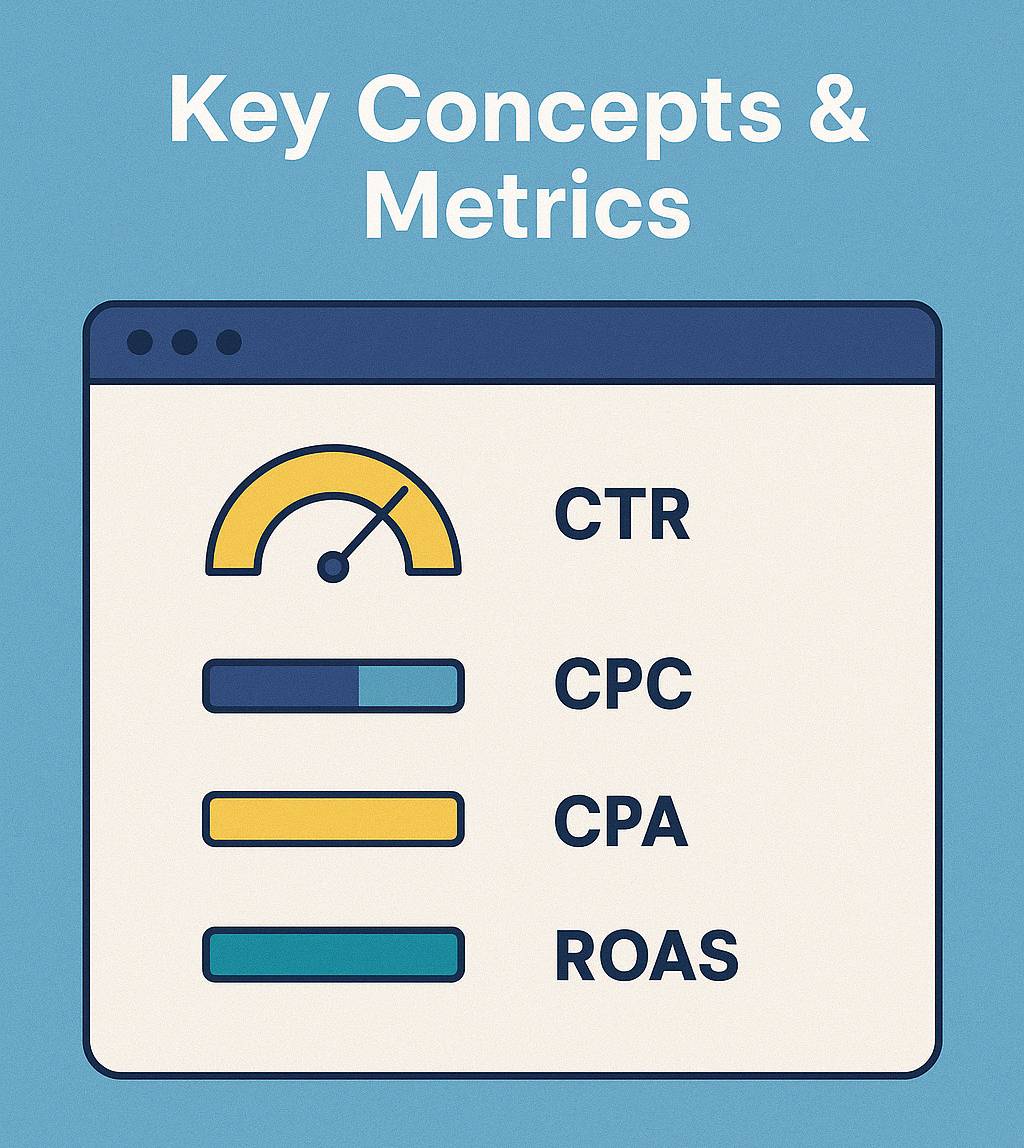
Before diving into tactics, let’s clarify some essential terms and metrics. These help diagnose where your funnel is leaky and what to optimise.
| Term | What It Measures | Why It Matters |
|---|---|---|
| Impressions | How many times your ad was shown. | Establishes reach, visibility. High impressions needed for awareness, but alone not enough. |
| Click-Through Rate (CTR) | Clicks ÷ Impressions. | Shows how compelling your ad creative + copy + targeting are. Low CTR means your ad isn’t resonating. |
| Cost Per Click (CPC) | How much you pay for each click. | Important for budget efficiency. A low CTR but high CPC is a losing combination. |
| Conversion / Conversion Rate | Actions taken (sale, signup, etc.) ÷ number of clicks or visitors. | Ultimate measure of how many people take the desired action. |
| Cost Per Conversion (CPA) | Total spend ÷ number of conversions. | Shows you how much you’re paying for each lead or sale. If this is higher than what a conversion is worth, you need adjustment. |
| Return on Ad Spend (ROAS) | Revenue generated from ads ÷ cost of ads. | Key business metric. |
| Attribution | Which touchpoints contributed to the conversion. | Helps you understand what’s working (ads, retargeting, email follow-up etc.). |
These metrics tell you where you need to focus. If CTR is low, fix your creative/targeting. If conversions are low but clicks are good, optimize landing pages or offers.
Pro Tips:
- When CTR is low → fix ad creative & targeting.
- When conversions are low → fix landing pages & offers.
Five Key Pillars to Turn Impressions into Conversions
To make your digital ads work harder, you need to optimise across five areas:
- Audience + Targeting
- Creative and Messaging
- Offer + Call to Action (CTA)
- User Journey & Landing Page
- Measurement, Testing, and Iteration
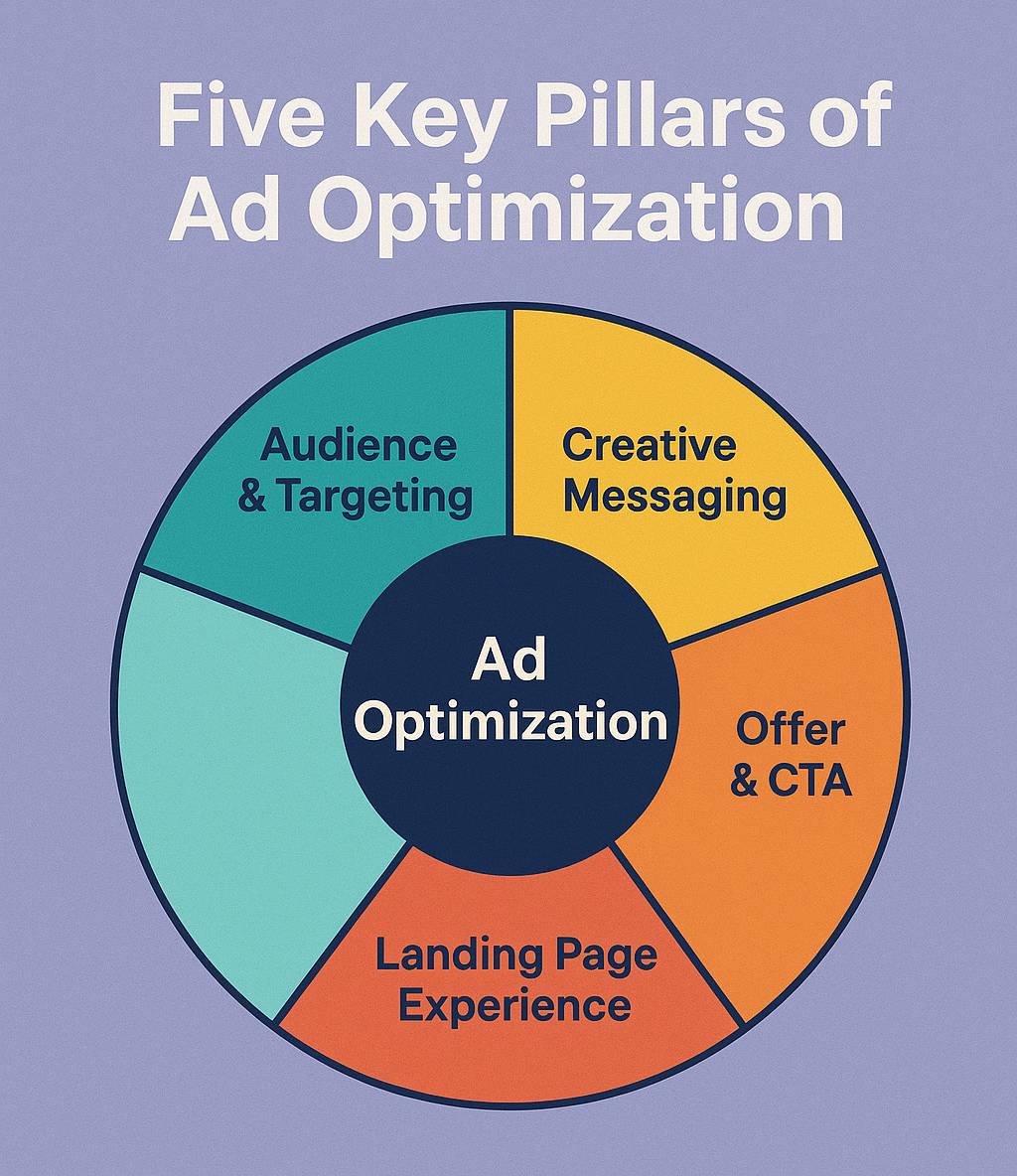
Let’s explore each pillar in detail, with examples, best practices, and possible pitfalls.
1. Audience & Targeting
If your ad is being shown to people who are not interested, it doesn’t matter how amazing the creative is — it won’t convert.
Best practices:
- Segment your audience: Use demographic, behavioral, geographic, and psychographic data to split your audience. For example, people already visiting your site (but didn’t convert) are often more likely to convert than cold audiences.
- Retargeting: Show ads to people who have already engaged (visited product pages, added to cart, etc.). They are further down the funnel and need a push. Converted.in suggests this as one of the top strategies for Google Ads.
- Negative targeting / negative keywords: Exclude audiences or keywords that are irrelevant. For example, if you sell premium products, you may want to exclude searches that include “cheap” or “discount.” Helps improve the quality of clicks.
- Geo/location targeting & bid adjustments: Sometimes conversions vary greatly by region. Push more budget into high-performing areas. Use bid modifiers for location.
- Lookalike / similar audiences: Based on your converting customers, find new ones that “look like” them. Helps scale while maintaining quality.
- Awareness → consideration → decision funnel strategy: Use broader targeting for awareness (more impressions), then narrow as people move down the funnel.
Pitfall to watch out for:
- Over-targeting too early can limit reach.
- Using too-broad targeting leads to wasted impressions.
- Failing to refresh or refine audiences — old lists can become stale.
2. Creative & Messaging
Your creative (visuals, video, images) + copy are what get someone to (a) notice your ad, (b) click it. If they fall flat, you might get impressions but little action.
Best practices:
- Strong, clear value proposition: What problem are you solving? What benefit will they get? Example: “Get 30% off today” is clearer than “Luxury watches available.”
- Relevant messaging per funnel stage:
- Awareness: brand story, benefits, credibility.
- Consideration: comparisons, features, social proof.
- Decision: urgency, incentives, guarantees.
- Include social proof/trust signals: Reviews, testimonials, star ratings, influencing figures.
- A/B testing creative variations: Try different headlines, images, layouts. See which gets higher CTR and then which ultimately leads to more conversions.
- Responsive/adaptive creatives: Display ads that adjust to different formats/screens. Responsive display ads on Google, adaptive video, etc.
- Use promotional & extension features: E.g., promotion extensions in Google Ads that show discounts even before click.
Pitfalls:
- Too many messages or cluttered creative leads to confusion; dilute CTA.
- Copy that doesn’t match the landing page promise → bounces.
- Not testing enough — sticking to one creative that “seems good” but underperforms.
3. Offer & Call-To-Action (CTA)
Even with good targeting and creative, if what you ask the user to do is weak or confusing, conversions will suffer.
Best practices:
- Strong, urgent offers: Discounts, limited-time deals, free shipping. Offers that reduce friction or perceived risk.
- Clear CTA: Use action-oriented language (“Buy Now”, “Get Free Demo”, “Sign Up”) and make it prominent. Don’t hide it.
- Match offer in ad → landing page: If your ad promises “20% off”, the landing page should prominently show that. If not, users feel misled.
- Multiple CTAs depending on funnel: For cold audiences, maybe “Learn More” works better than “Buy Now”. For warm audiences, direct purchase CTA.
- Incentives & barrier reduction: Free trials, guarantees (“30-day money back”), simple returns.
- Use urgency or scarcity: “Only 3 left”, “Sale ends tonight”. But use these genuinely — false urgency damages trust.
4. User Journey & Landing Page
From the moment someone clicks your ad, the experience must be seamless. A jagged, confusing, or slow site will kill conversion momentum.
Best practices:
- Relevant landing page content: The landing page should follow through on what the ad promises. If the ad is about “New running shoes – 30% off”, the landing page must show those shoes, the discount, terms.
- Simple navigation, clear layout: Reduce distractions. Perhaps one goal per page. Avoid competing CTAs that distract users.
- Mobile optimization: Many users will click from mobile devices. If a page loads slowly, or is hard to use, bounce rates go up.
- Fast load speed: Even a second delay in load time can reduce conversion rate significantly.
- Trust & social proof: Ratings, testimonials, certifications, secure site badges.
- Minimal friction: Short forms, fewer fields. If possible, reduce required info. Autofill options.
- Remarketing paths: If someone abandons at checkout, you have emails or ads to bring them back.
- Multiple touchpoints: Sometimes one ad is not enough. Use retargeting, email follow-ups, maybe a chatbot to engage. Build a nurture flow.
5. Measurement, Testing & Iteration
Even the best-planned campaigns will have gaps. Measuring, analyzing, iterating is what turns impressions into real conversions over time.
Best practices:
- Set up proper tracking: Use analytics, conversion pixels, event tracking. Know where your users come from, what they do. Without this, you’re flying blind.
- Define conversion events clearly: Purchase, lead, signup, demo request, etc. Define primary vs secondary conversions.
- Use attribution models: Understand which channels/touchpoints are contributing. Is it the first click, last click, multi-touch? Helps decide budget allocation.
- A/B testing: Constantly test ad copy, creative, landing pages, offers. Use data to decide. Even small lifts can lead to big gains when scaled.
- Analyze funnel metrics: Look at CTR, bounce rate, time on page, drop-off points. Where are people leaving? Fix those.
- Budget & bid optimisation: Use automated bidding where possible, for example optimizing towards conversion or ROAS. Shift budget towards high-performing ad groups.
- Monitor impression quality, not just quantity: High impression volume with low relevance can be wasteful. Use metrics like view-through rate, or impression share vs target audience.
Also Read - Google Ads Pricing in 2025: A Complete Cost Breakdown for Businesses
Real-World Examples / Case Studies
To make this concrete, here are a few examples of how companies made their digital ad impressions work harder.
- Converted.in – Google Ads Strategies for eCommerce
They outline a dozen tactics such as compelling ad copy, promotion extensions, negative keywords, retargeting etc., all intended to increase ROAS (return on ad spend). - Trucker’s Report
Had lots of traffic but low conversions. By changing the headline, redesigning the form, and adjusting background visuals, they improved conversions by ~79%. - UNIQLO – HeatTech campaign in Australia
Used digital billboards + social media + online/offline integration. They encouraged users to snap codes and upload them, then provide discounts / freebies. Resulted in high engagement, new customers, email list growth. - Adobe / Brand campaigns
Campaigns like CeraVe’s anti-advertising or UNIQLO’s Uncover show that when impressions are built into a narrative, with multi-channel amplification, they yield both brand awareness and conversion growth.
Putting It All Together: A Step-by-Step Workflow
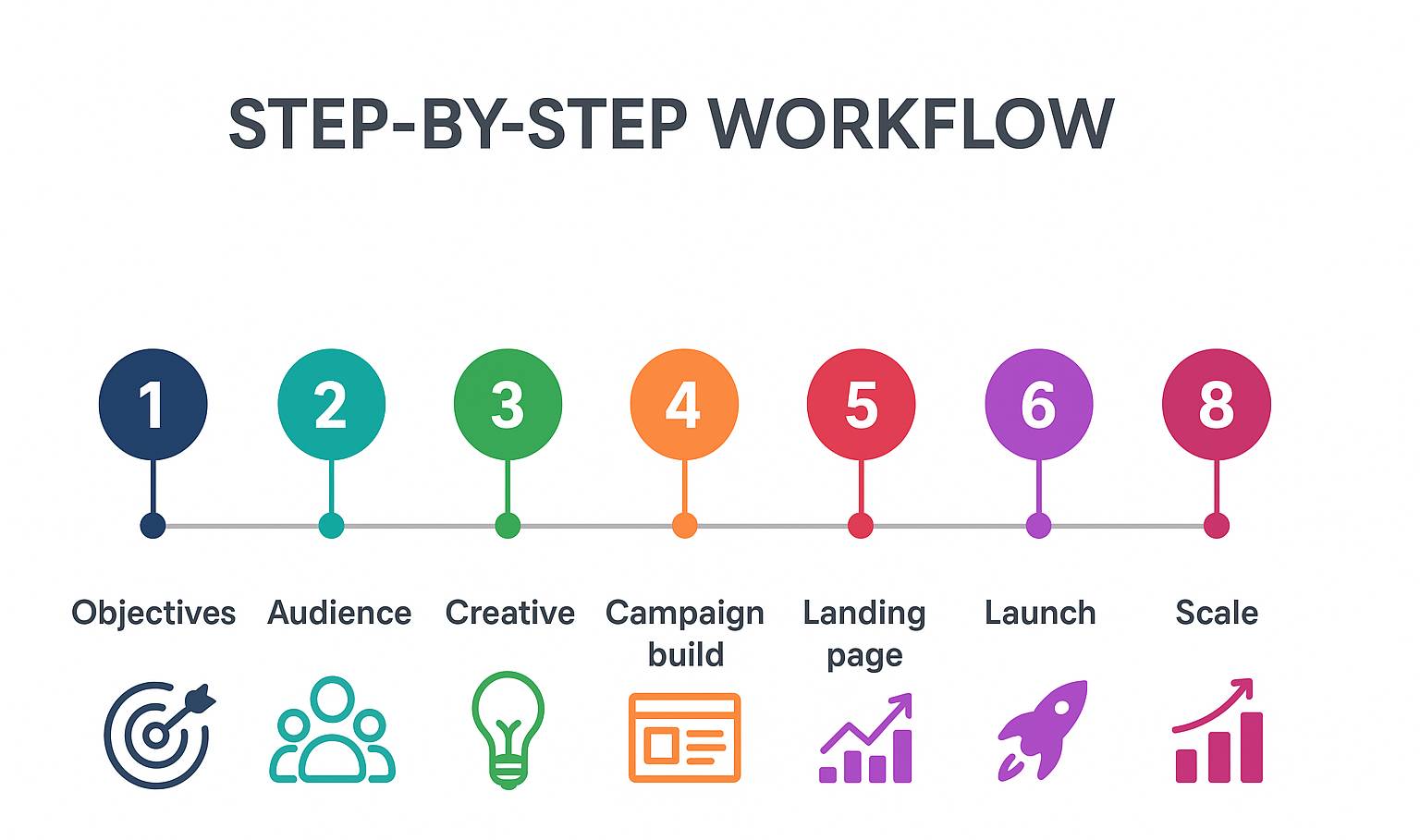
Here’s a suggested workflow to move from impressions-heavy to conversion-driven campaigns:
1. Define your objectives & customer journey
- What counts as a conversion for you?
- What stages will people go through (awareness → interest → decision)?
2. Audience research & segmentation
- Identify who are cold, warm, hot audiences.
- Build personas, get data from current customers.
3. Ad creative planning
- Plan different messages/visuals for different audience segments and funnel stages.
- Decide what offers / incentives you’ll use.
4. Build campaigns with layering
- Use prospecting (broad reach) + retargeting + remarketing.
- Include negative targeting to limit waste.
- Use appropriate ad formats (search, display, video, social) per goal.
5. Landing pages & post-click experience
- Make sure promises made in ads are fulfilled.
- Speed, clarity, mobile readiness.
- Reduce distractions.
6. Tracking & attribution setup
- Install analytics, pixels, event tracking.
- Decide how you will attribute credit (first, last, multi-touch).
- Set up dashboards / reports.
7. Launch + testing
- Start with smaller budgets to test different creatives, audiences.
- A/B or multivariate test ad copy, visuals, offers.
- Monitor early indicators (CTR, bounce, off-site metrics).
8. Scale & optimise
- Shift budget to what works.
- Prune underperformers.
- Refine messaging, targeting.
- Introduce automated bidding / optimization tools.
9. Retain & re-engage
- Post-purchase follow-ups, loyalty, repeat sales.
- Abandoned cart sequences.
- Cross-sell / upsell.
10. Continuous learning
- Review results regularly.
- Learn from failures.
- Keep up with platform changes (e.g., how Facebook/Instagram/Google optimize for conversions, privacy changes etc.).
Common Challenges & How to Overcome Them
| Challenge | Why It Happens | Possible Solution |
|---|---|---|
| Low CTR despite lots of impressions | Creative is weak / irrelevant; targeting too broad; message misaligned | Refine messaging, sharpen visuals, test multiple creatives; target more precisely |
| High clicks but very low conversions | Landing page mismatch; slow site; unclear CTA; too many steps/forms | Optimize landing page, speed up load times, simplify forms, remove distractions |
| High CPA (cost per conversion) | Poor targeting; bid inefficiencies; competition; weak offers | Use more precise targeting, optimize bids, improve offer, reduce friction |
| Difficulty attributing conversions | Multiple touch-points; poor tracking; cross-device issues | Implement multi-touch attribution, cross-device tracking, use tools & platforms that support this |
| Scaling without loss of efficiency | What works at small scale may fail when budget increases | Test scaling slowly, monitor performance, avoid budget dilution, maintain creative freshness |
Emerging Trends & Future-Thinking
To stay ahead, here are some trends and shifts to be aware of:
- Privacy / data restrictions: Changes in cookies, platform policies require better first-party data, server-side tracking.
- Machine learning / automation: Platforms giving more power to auto-bidding, dynamic creative optimization, automated audience expansion.
- Personalization at scale: Tailored messages, dynamic content based on user behavior, dynamic offers.
- Cross-channel orchestration: Users see your ads on multiple platforms. Consistency across channels helps reinforce messages and improve conversions.
- Focus on customer lifetime value (CLV) instead of immediate conversion: Sometimes a cheaper lead that stays for a long time is better than an expensive one-time purchase.
- More visual / immersive formats: Video, augmented reality, interactive ads that pull people in and build engagement.
Also Read - How to Track Events with Google Analytics 4
Key Takeaways
- Impressions are necessary but not sufficient. They are just the start.
- To convert, every stage: targeting → creative → offer → landing page → follow-ups must be aligned.
- Data is your friend: measure, test, iterate.
- Start with smaller tests, double-down on what works. Scale smartly.
- Keep the user experience in mind: fast, relevant, trustworthy.
Turning impressions into conversions doesn’t happen by accident. It requires deliberate design of your funnel, constant refinement, and a focus on what matters: matching what people want, when they want it, and removing any obstacle between them and the action you want them to take.
Final Thoughts
Turning impressions into conversions takes strategy, data, and continuous optimization. By improving targeting, creatives, offers, landing pages, and analytics, you can turn ad spend into measurable growth.
At DO Communication, we help brands create conversion-focused digital ad campaigns using data-driven strategies and creative storytelling.
FAQ About Ad Impressions Into Conversions
Q1. How do you turn ad impressions into conversions?
To turn ad impressions into conversions, focus on audience targeting, ad creatives, and landing page optimization. Use clear CTAs, retargeting strategies, and A/B testing to improve conversion rates.
Q2. What is a good conversion rate for digital ads?
A good conversion rate depends on the industry, but most digital advertising campaigns aim for at least 2–5%. With conversion optimization techniques, some campaigns achieve rates above 10%.
Q3. How can I improve my digital advertising ROI?
You can improve digital advertising ROI by:
- Optimizing ad creatives and messaging
- Running cost-effective PPC campaigns
- Tracking metrics like CTR, CPC, and CPA
- Retargeting potential customers who showed interest
Q4. Why is landing page optimization important for ad conversions?
Landing page optimization ensures that visitors get a seamless experience after clicking your ad. A fast-loading, mobile-friendly landing page with relevant content and clear CTAs increases digital ad conversions.
Q5. What metrics should I track for ad performance?
Key metrics to track include:
- CTR (Click-Through Rate) for engagement
- CPC (Cost per Click) for cost efficiency
- Conversion Rate for performance
- ROAS (Return on Ad Spend) for profitability
Q6. How do retargeting strategies help in increasing conversions?
Retargeting strategies focus on users who have interacted with your ads or website but didn’t convert. By showing personalized ads, retargeting campaigns often boost conversion rates significantly.
