

From offline billboards to AI‐driven personalisation, Marketing has evolved to a whole new level. But at its core lies the timeless “4ps of Marketing:” Product, Price, Place and Promotion. Understanding each element and how they interconnect is important, especially with the rise of different types of marketing.
From traditional to digital, content, and influencer marketing. This guide will help explore each ‘P’ with real-world examples to help you learn how to do marketing.
Table of Contents
What Are The 4 Ps Of Marketing?
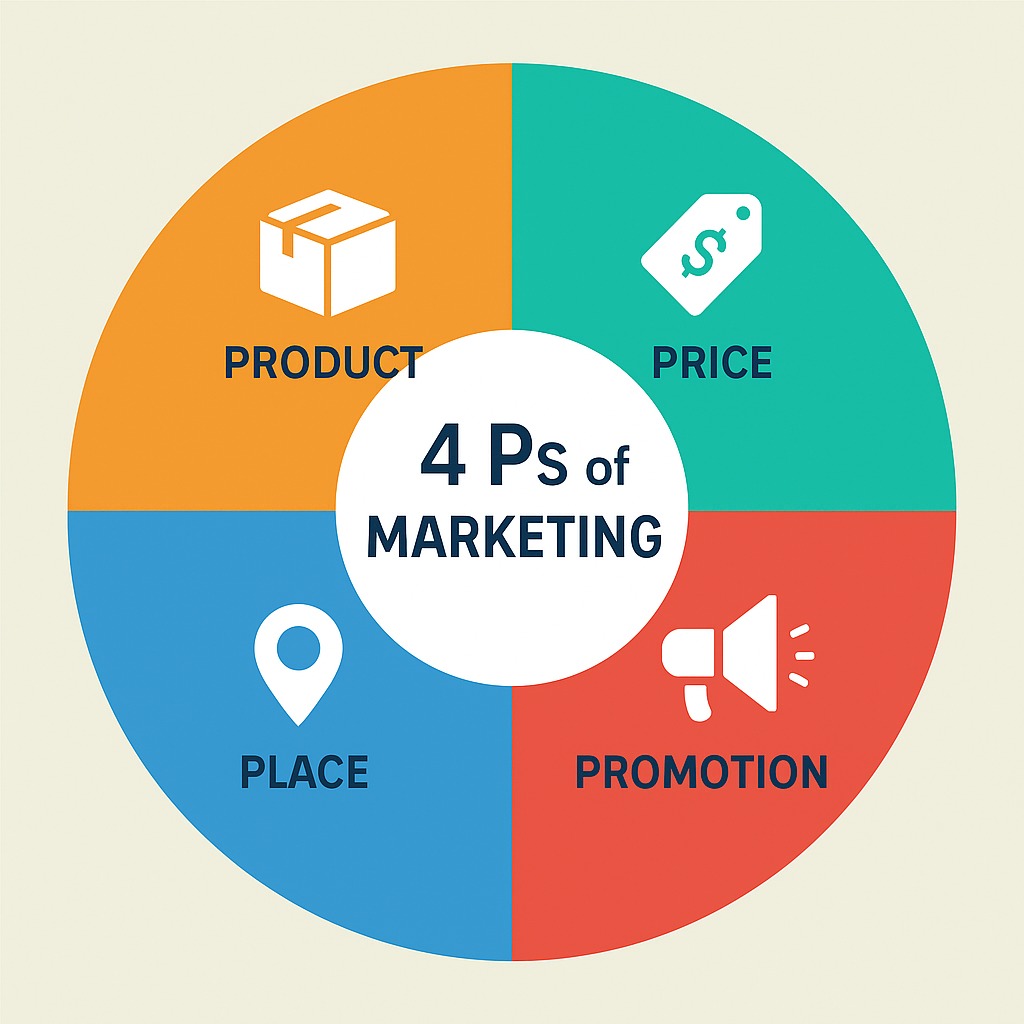
The 4 Ps of marketing are:
- Product
- Price
- Place
- Promotion
These concepts were introduced by Professor E. Jerome McCarthy and constitute the marketing mix, a combination of actions or tactics a company engages in to advertise its brand or product.
1. Product: What Are You Selling?
A product is an offering made to a customer which could be a good, service, or an experience. Analysis of customer expectations of the target market is a critical step to achieving successful problem solving in product development.
Example:
Amul has consistently evolved from offering butter to ice cream, cheese, and even ready-to-eat snacks. Amul has managed to cross generational gaps because of his focus on the demands of the consumers and the taste preferences.
In formulating the product strategy, think about the:
- What are the product features?
- What value does it provide to the customer?
- What is the competitiveness of the product?
2. Price: What Will It Cost?
Price is the amount a customer pays for a product. It is dependent on the market demand, market competition, brand value, manufacturing cost, and many others. Price is a critical component for a business. It is the biggest determinant of profit and value perception.
Example:
Jio phone by Reliance entered the telecom market with data and calling features at no charge or at a nominal fee. This price of services strategy enabled Jio to gain a lot of customers in a short amount of time.
There are different categorisations regarding pricing strategies, like:
- Penetration pricing
- Skimming pricing
- Competitive pricing
- Value-based pricing
What is the difference between price and value? Price is the payment, and value is the thinking of worth.
3. Place: Where Will You Sell?
Place is related to the distribution strategy of how and where your product is accessible to your customers. It involves physical locations, online shops, the supply chain, and retail distribution channels.
Example:
DMart succeeds because of its focus on high-volume physical retail locations, offering grocery items at competitive prices. On the other hand, Nykaa has revolutionised beauty retail through a mix of online and offline channels.
Identifying the right place also takes:
- Customer convenience
- Logistics
- Working with distributors or other convenient channels
The difference between online and offline place strategies is scale, scope of reach, and interaction with clients.
4. Promotion: How Will You Spread the Word?
Promotion is concerned with all activities to notify and convince the customers like advertising, social media, PR, or marketing through an influencer. It is the intersection of creativity and communication.
Example:
Fevicol has become a household name in India with the aid of witty television and print advertisements. Similarly, Zomato employs meme-based marketing and offbeat social media updates to maintain brand recall.
More recent marketing practices consist of:
- Social media marketing
- Influencer marketing
- Performance marketing
- Content marketing
In recent years, businesses have focused more on promotion strategy. Aligning with the audience is crucial. For targeting Gen Z, Reels and Shorts outperform newspapers by miles.
Types of Marketing
Given the cultural diversity in India, the consumer behaviour is equally diverse and the marketer tailors their strategy to achieve the set objectives. Consider the following types of marketing that stand out in the Indian context:
1. Digital Marketing
This includes SEO, SEM, email marketing, and social media. Especially beneficial for new businesses, such as D2C brands like Boat and Mamaearth.
2. Traditional Marketing
This includes TV, radio, newspapers, and outdoor advertising. These media still hold significant sway among audiences in Tier II and III cities.
3. Influencer Marketing
With a primary focus on millennials, brands like Sugar Cosmetics and Beardo have started collaborations with social media influencers to promote their products.
4. Rural Marketing
Targeting rural India, Hindustan Unilever has tailored specific campaigns that focus on price and availability.
5. Marketing Through Experiences
Experiential marketing includes engaging the customer through events, pop-up shops, and festivals. Coca-Cola India is particularly active during college festivals and during the cricket season.
What Are the Marketing Practices in India?
Cultural compositions, differences in the economy, and the level of technology adoption all need to be kept in mind when dealing with the marketing practices in India. Here’s a simple roadmap.
- Research the demographic: Is your focus an urbanised millennial or a rural-based housewife?
- Pin down objectives: Is the goal to increase brand recall, sales, or leads?
- Select outreach method: A combination of digital, social media, and offline marketing would be most beneficial.
- Compose content with a regional touch: Use cultural references and regional dialects.
- Assess and adjust accordingly: Google Analytics and Meta Ads Manager are some of the many tools available.
Marketing in Detail: The Indian Perspective
As a digitally inclined and brand-conscious economy, Indian customers deem the value of the product to be of utmost importance. The following factors will dramatically increase impact:
- Emotional storytelling: Brands like Tanishq and Tata Tea leverage emotional storytelling during value advertisement to connect with the customer’s sentiments.
- Festive campaigns: Indian’s take promotional objectives during Diwali, Holi, Eid, and Pongal very favourably.
- Smartphone compatibility: With 800 million smartphone users, optimising marketing for mobile devices is crucial.
- Authenticity and openness: Gaining and seeing real reviews with real customers online and during support interactions boosts credibility.
Advantages of Learning about the 4 Ps of Marketing
Understanding the 4 Ps of marketing is beneficial for businesses in:
- Establishing a clear and consistent brand message
- Targeting the appropriate audience
- Increasing ROI
- Developing customer loyalty over time
Implementing a marketing mix is the secret to sustainable growth, whether it is a tea stall in Jaipur or a fashion brand in Mumbai.
Also Read - Guide to AI in Digital Marketing - The Ultimate Guide and Actionable Tips
Final Thoughts
So, what is marketing in detail? It is conveying value to a customer with the right product, price, place, and promotion. Understanding the difference between various types of marketing and mastering the 4 Ps of marketing gives an upper hand to Indian businesses competing in the domestic and international markets. In the modern age, businesses that change their marketing practices with precision, innovative thinking, and a customer-centric approach will always be ahead of the pack.
Elevate your brand visibility and marketing impact with DO Communication – the top-rated SEO company in Gurgaon.
